
Last updated September 20, 2026
Free on-site gate assessment - hinges, posts, and your LiftMaster or Nice gate operator checked before anything is quoted
The assessment is free and the quote is the invoice.

Farm & ranch
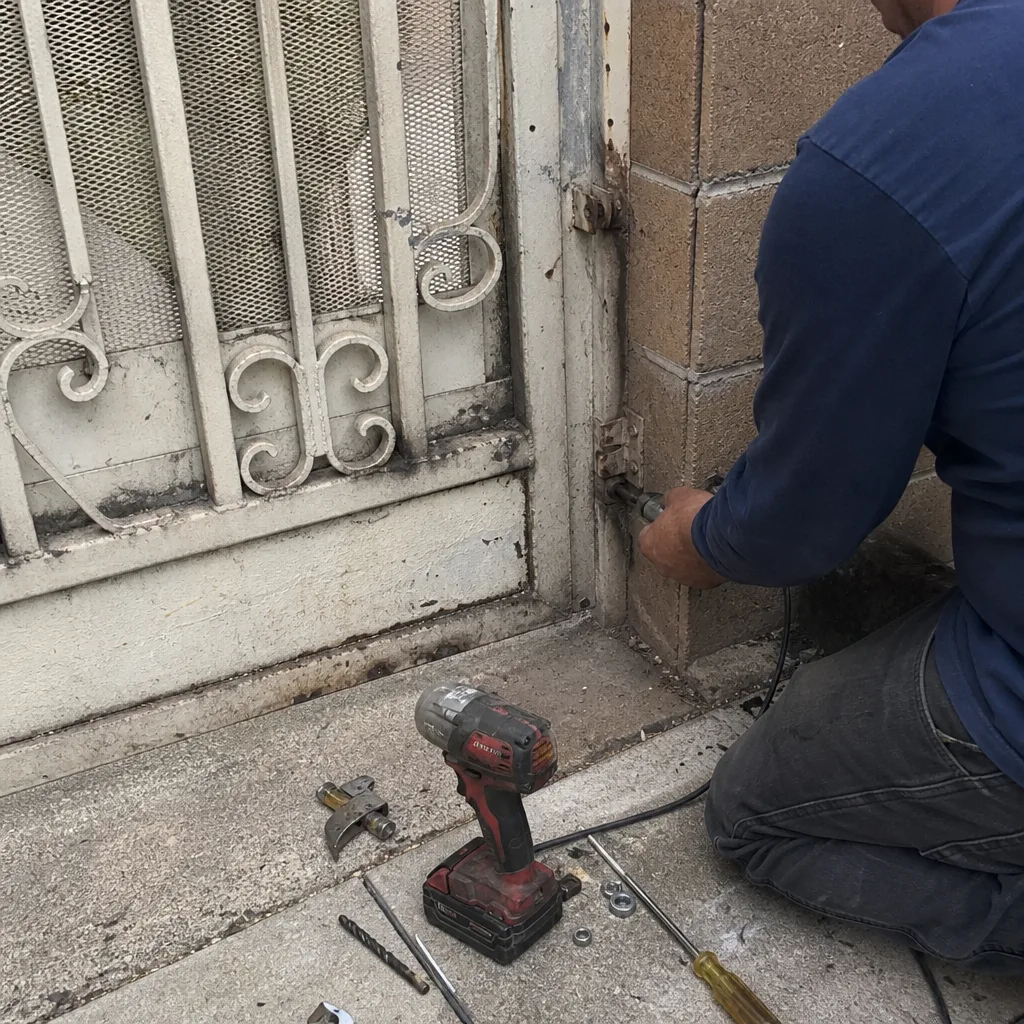 Before
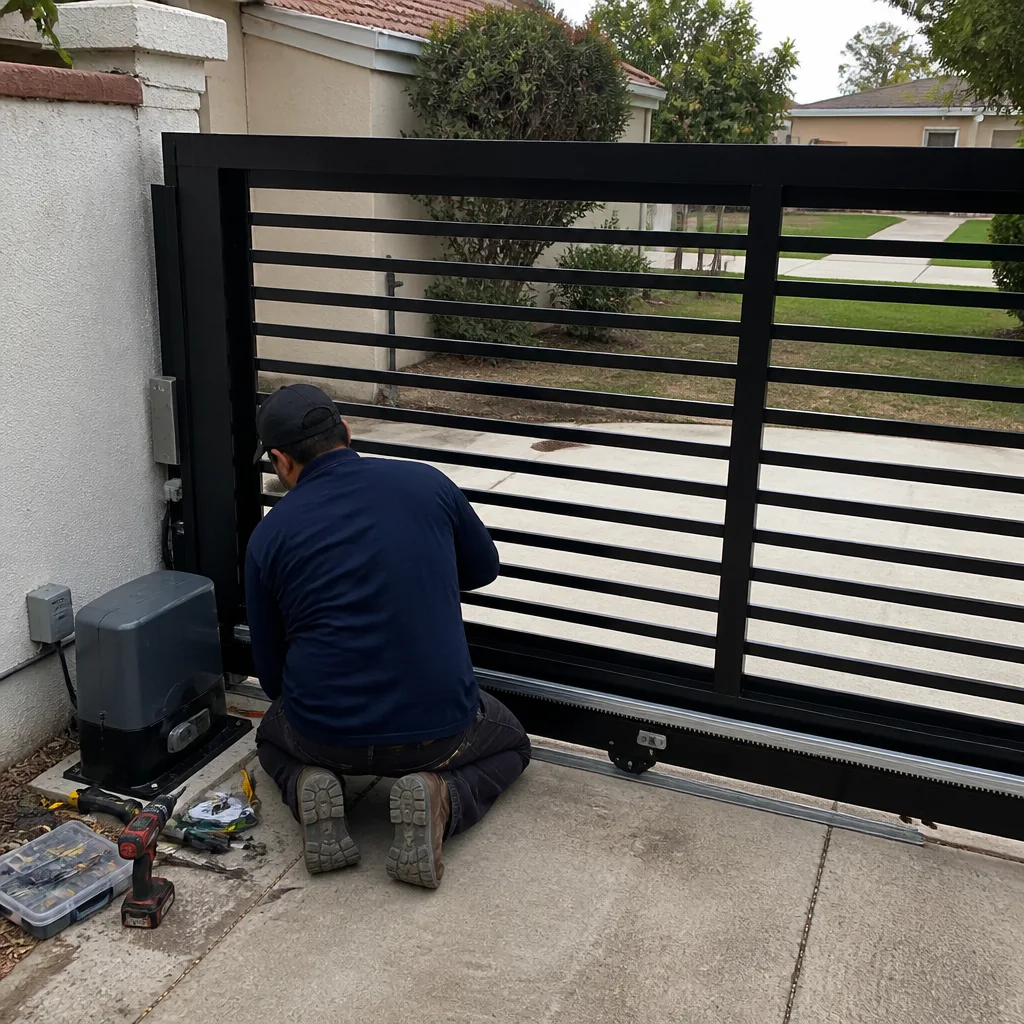 After
After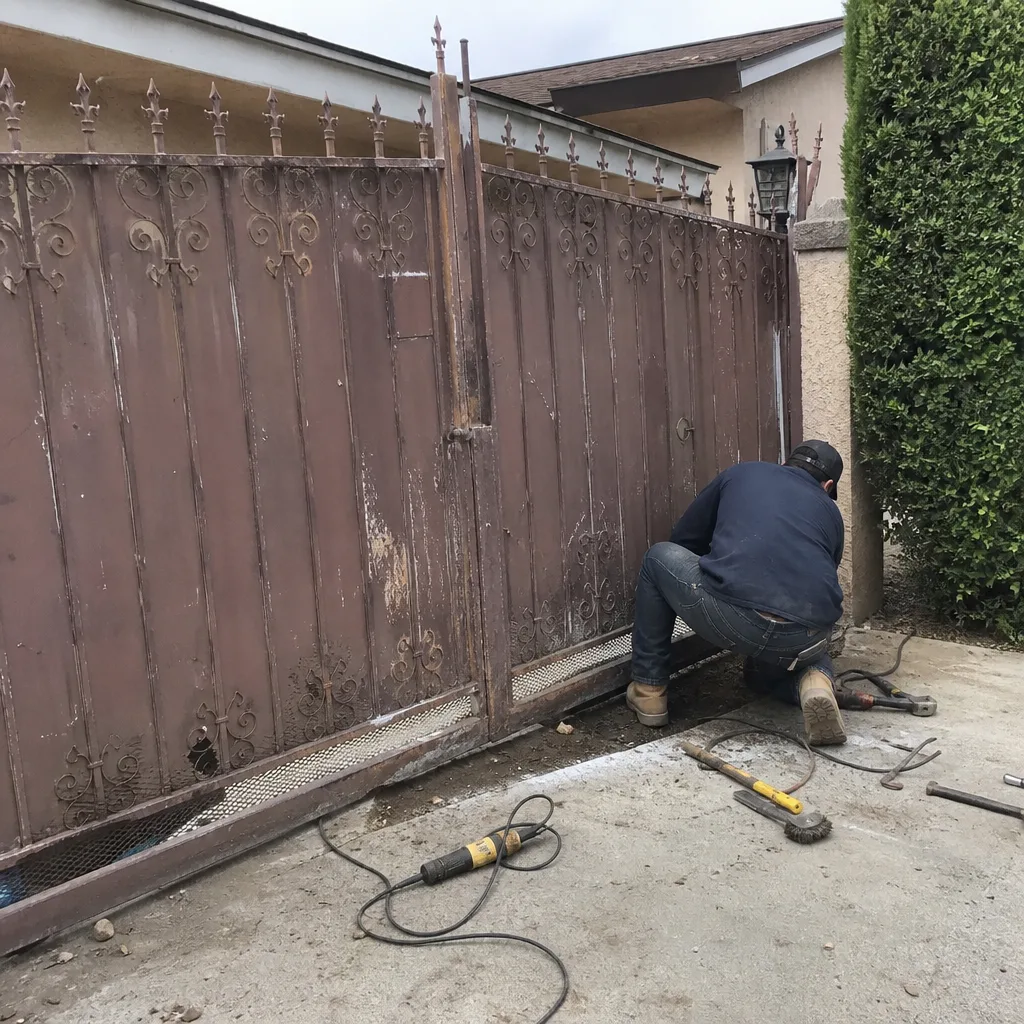 Before
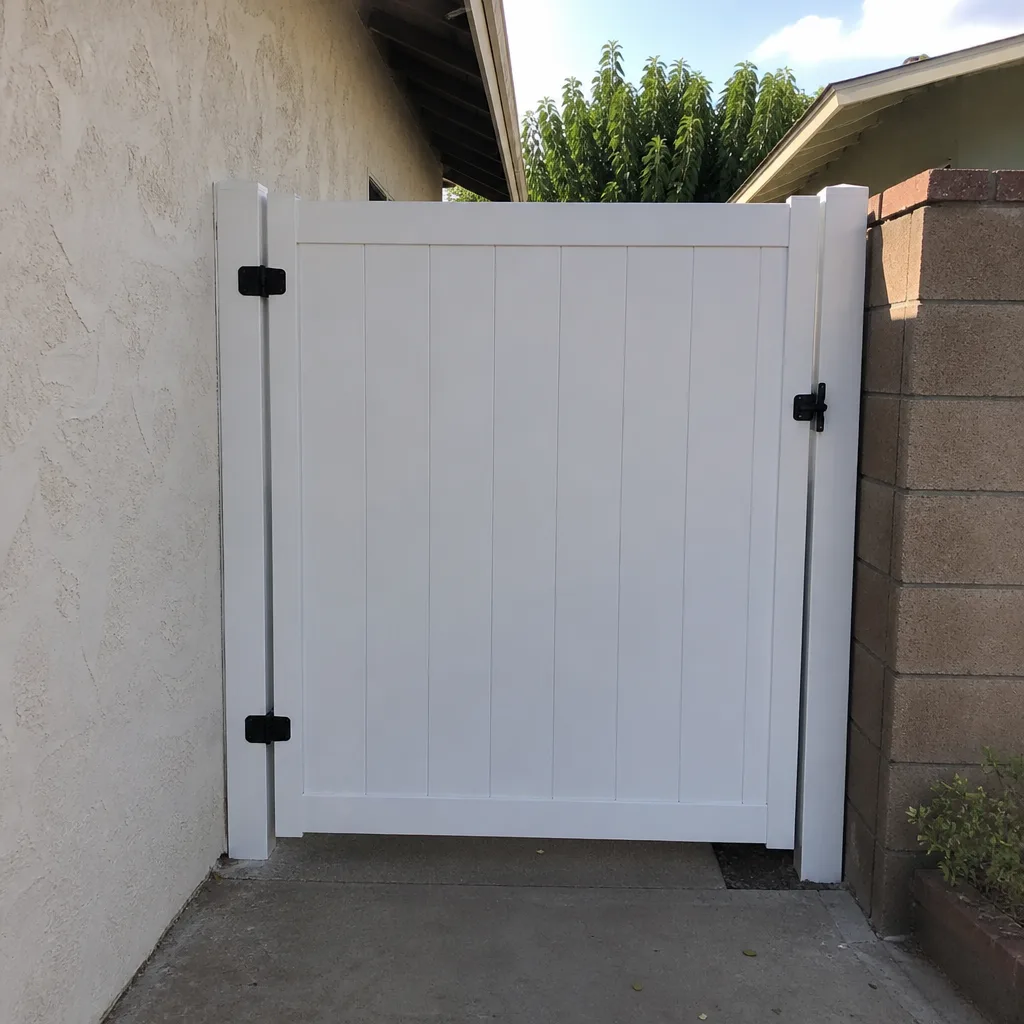 After
After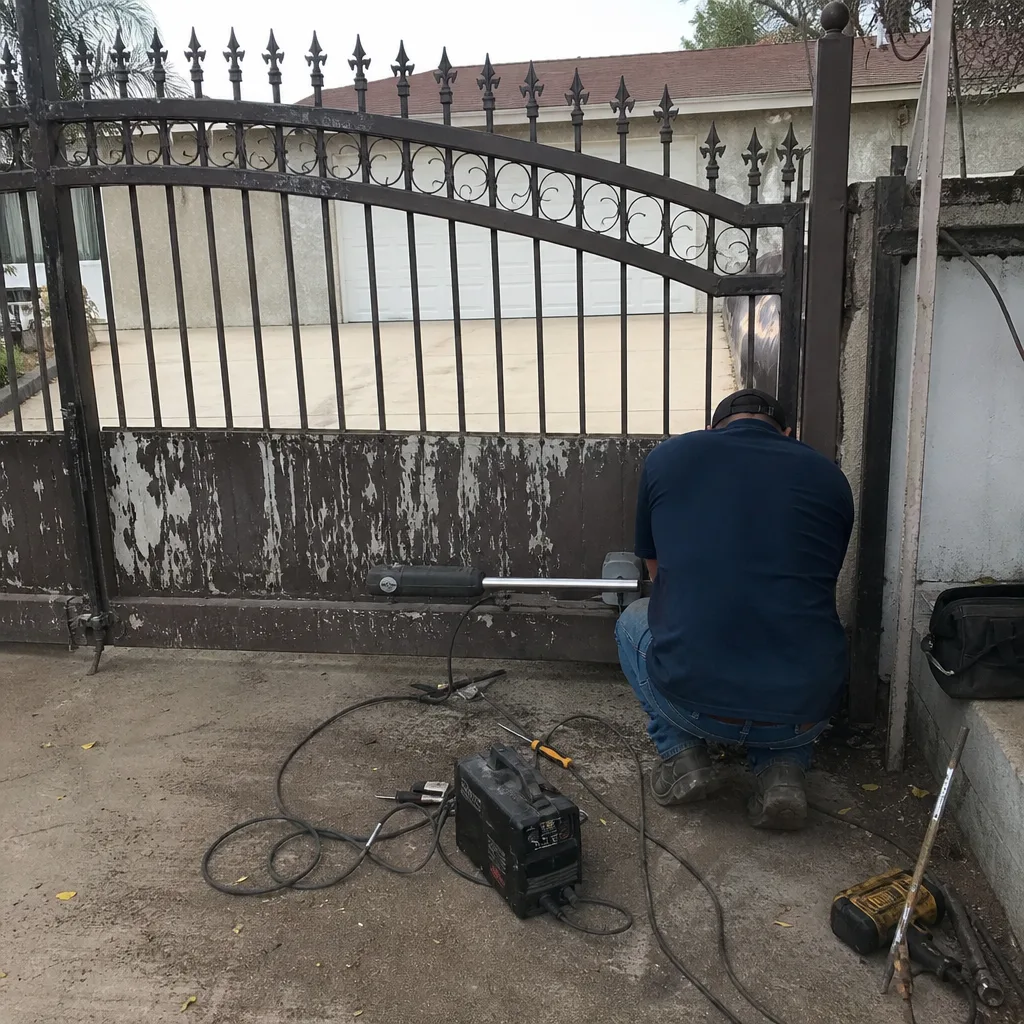 Before
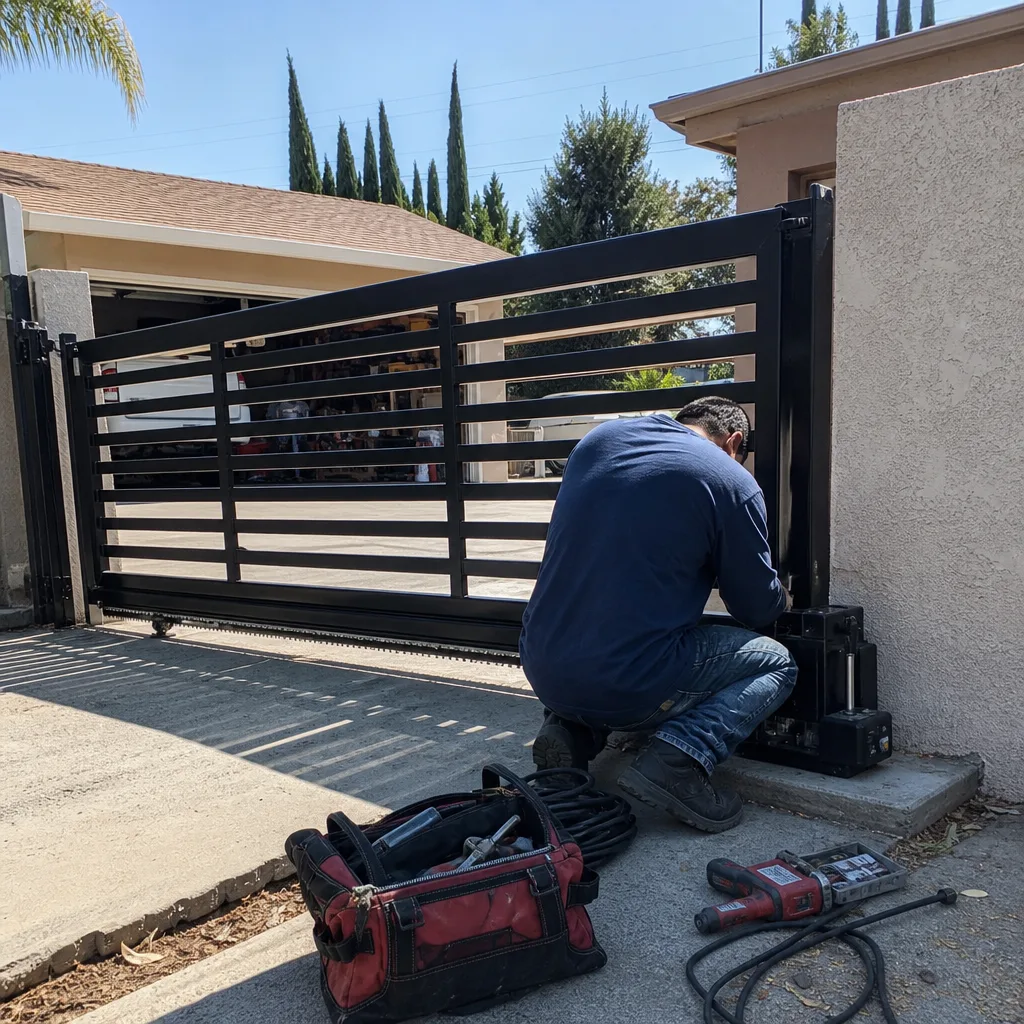 After
AfterGate Repair Permits, Codes & Inspections in CA: What You Need to Know
A $400 gate operator installed without a permit can surface on a title report as an unpermitted electrical modification when you sell the house, and in Los Angeles County, that cost falls to the seller at close. The installer who skipped the permit three years ago isn’t writing the check; you are. This guide draws the line between a repair that needs no paperwork and a modification that requires a permit, an inspection, or an HOA approval letter before the first wire is pulled. We’re writing this from West Covina because the questions we hear from homeowners here reflect what LA County actually enforces, not what the internet repeats.
Quick Answer
Most gate repairs in California do not require a permit, including replacing springs, hinges, wheels, or a failed circuit board on an existing operator. Permits are required when you install a new electrified gate operator, run new electrical wiring, or replace an existing operator in a way that adds new wiring runs beyond the original installation. HOA approval is a separate requirement that can delay a gate project even when the city permit isn’t needed.
Table of Contents
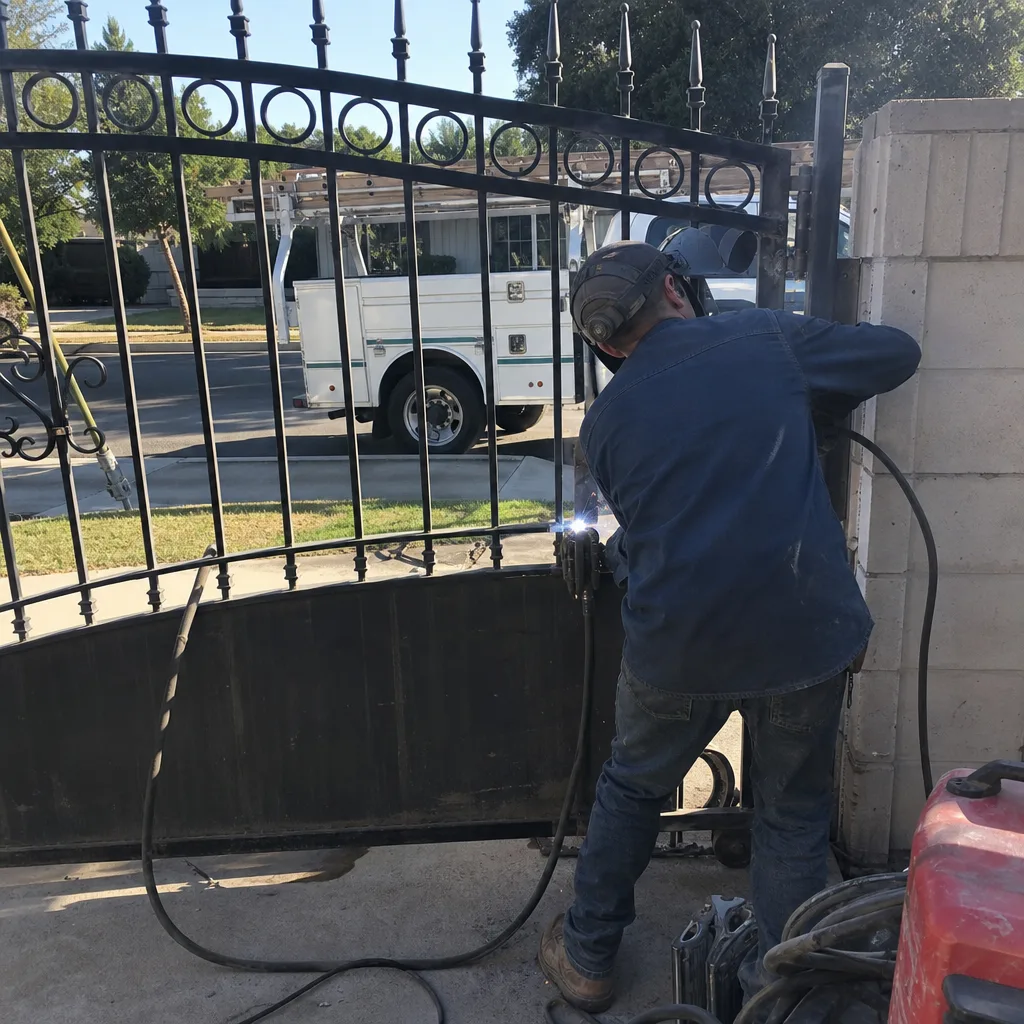
- What Actually Requires a Permit in California
- Repair vs. New Installation: The LA County Line
- UL 325 and Entrapment Protection: What the Inspector Checks
- HOA CC&Rs and Gate Work: The Timeline Issue
- What a Gate Inspection Actually Checks
- Unpermitted Gate Work and Resale: CLUE Reports and Title Searches
- Common Mistakes to Avoid
- When to Call a Professional
- Frequently Asked Questions
- The Bottom Line
BeforeAfterWhat Actually Requires a Permit in California
California’s building code doesn’t treat “gate repair” as a single category. It treats each component of the gate separately: the physical structure, the motor, the electrical feed, and the safety devices. A homeowner can replace a bent hinge, a rusted wheel, or a sagging picket without any permit because those are maintenance items, not construction. The moment electricity enters the picture, the rules change.
Here’s what the California Residential Code and the California Electrical Code treat as permit-triggering work on a residential gate:
- New electric gate operator installation: Any motorized operator that is being installed for the first time requires an electrical permit. This includes solar-powered operators, because the code regulates the operator and its safety devices, not just the power source.
- New electrical circuit or wiring run: Running a new 120-volt circuit from the main panel to a gate operator is electrical work that requires a permit, even if the operator itself is a like-for-like swap.
- Replacing an operator that adds new wiring beyond the original scope: If the original operator had a 2-wire run and the replacement needs a 4-wire run or a separate low-voltage control line, that is new wiring and triggers the permit requirement.
- Structural gate posts set in concrete on a new installation: New gate posts poured into footings are structural work under the code. Replacing a broken post on an existing gate is typically repair work, but check with your city because some inspections departments in West Covina treat post replacement on a driveway gate as a repair and some do not.
- Any gate over 7 feet in height: Gates over 7 feet are treated as a wall or fence under some city codes and may trigger additional setback or height review.
What does not require a permit: replacing a gearbox, swapping a photo-eye, changing a limit switch, replacing a remote-control receiver, replacing a circuit board with a board made for the same operator model, replacing hinges, replacing wheels, straightening or welding a gate frame, replacing a chain or belt drive, or adding a keypad to an existing operator. In our experience across West Covina, roughly 80% of the calls we run are for repairs in this no-permit category.
A useful rule: if the work does not add a new electrical run, does not change the structural footprint, and does not install a motor where no motor existed, you’re almost certainly in repair territory. If any one of those three things happens, call the building department or ask a licensed contractor to make the call for you. The building department in West Covina answers permit questions by phone and typically responds within a business day or two.
Repair vs. New Installation: The LA County Line
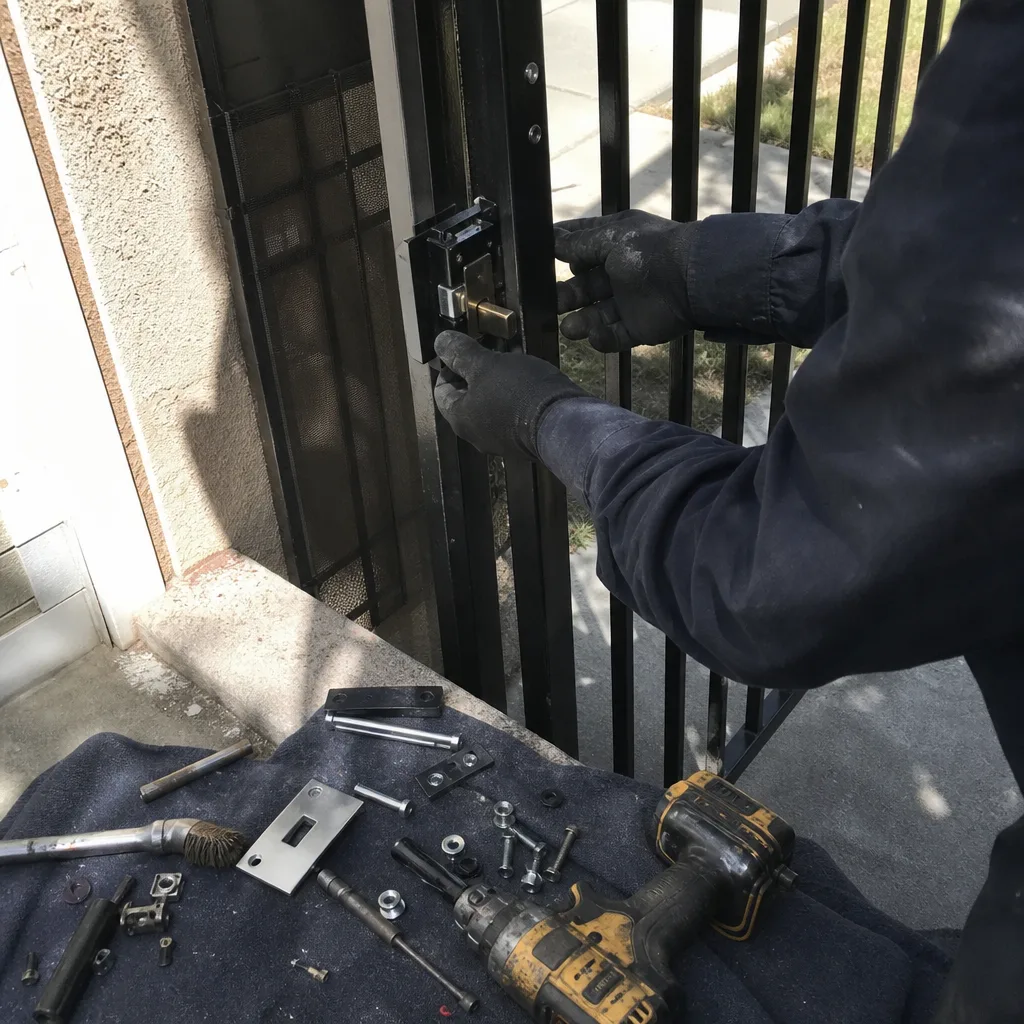
Los Angeles County building code draws the line between repair and new installation using a specific test: whether the scope of work changes the original installation’s design, footprint, or electrical characteristics. A repair restores the gate to its original designed function. A replacement that changes how the gate operates or how it is powered is a new installation in the eyes of the code, even if you’re bolting it to the same posts.
The specific trigger conditions that convert a repair into a new installation under LA County code enforcement practice are:
- Like-for-like operator swap that adds new wiring runs: You replace a Mighty Mule operator with another Mighty Mule operator of the same model series, but the new unit requires a separate low-voltage run for a monitored photo-eye. That added run is new electrical work. The permit is required because of the wiring, not because of the operator brand.
- Switching operator brands with different voltage requirements: Replacing a 12-volt DC operator with a 24-volt AC operator means the transformer, wiring gauge, and possibly the breaker all change. That’s a new electrical installation, not a repair.
- Adding a motor to a gate that was previously manual: This is the most common misclassification. A homeowner buys a solar-powered operator from a big-box store and bolts it to an existing manual swing gate. No permit is pulled because “it’s solar, there’s no wiring.” The code doesn’t care how the operator is powered. It’s a new motorized gate, and motorized gates must meet UL 325 entrapment protection standards. The permit is required.
- Moving the operator or the gate posts: If the repair involves relocating the operator to a different position on the gate or moving the gate posts to widen the driveway opening, that’s a new installation.
- Replacing a gate that crosses a property line or a common easement: If the gate sits on a shared driveway, a flag lot, or an easement recorded on the title, replacing it may require both a permit and written consent from the easement holder. This is a situation where a repair becomes a legal matter, not just a code matter.
What surprises most West Covina homeowners is how often a “simple operator replacement” falls into the new-installation category once the schematic is actually examined. We’ve seen this on gates in neighborhoods like Galster Park and Weatherby where the original operator was installed in the 1990s and the wiring was minimal. A modern operator, even a like-for-like brand replacement, often needs additional low-voltage pairs for monitored safety devices. The permit isn’t a bureaucratic nuisance. It’s the mechanism that ensures the installation gets inspected against current entrapment standards. When we perform a Gate Motor & Opener in West Covina replacement, we check the original wiring diagram before recommending whether the job is a repair or a new installation, and we tell the homeowner which one applies before the work starts.
UL 325 and Entrapment Protection: What the Inspector Checks
UL 325 is the safety standard that governs automatic gate operators. It was written in response to deaths and serious injuries caused by gates that did not stop or reverse when a person, child, or vehicle was in the gate’s path. Every electrically powered gate operator sold in the United States must comply with it. The standard has been revised multiple times, and the current version requires two independent entrapment protection systems on any gate that can be remotely operated.
The two required systems work differently. The first is called the inherent system, which is the operator’s own force-sensing capability. The operator monitors the current draw on the motor and reverses if it encounters unexpected resistance. The second is the external system, which is typically either a photo-eye (an infrared beam that spans the gate opening and stops the gate if the beam is broken) or a contact edge (a pressure-sensitive strip mounted on the gate edge that reverses the gate when it is compressed).
When you replace an operator that was manufactured before the current UL 325 revision, the replacement triggers a requirement to bring the entrapment protection up to current code. That means the inspector will verify:
- That both entrapment protection systems are present and functional.
- That the photo-eye or contact edge is mounted at the correct height for pedestrian detection, typically within 6 inches of the ground for a photo-eye on a swing gate.
- That the operator’s force-sensing reversal works at the closing limit and the opening limit.
- That warning signs are mounted on both sides of the gate and are legible.
- That the gate has a manual release mechanism that a person can operate without special tools in the event of a power failure.
Not every operator replacement triggers a mandatory inspection, but every operator replacement that falls into the new-installation category does. The inspector is checking the safety devices, not the brand. A DoorKing, Elite, or LiftMaster operator all must meet the same UL 325 standards. A licensed contractor performing the work is required to test the entrapment protection and document the settings. That documentation, including limit-switch readings and photo-eye alignment, is part of what we hand to the homeowner at the end of every job under Clause 4 of The Haven Standard, which requires a documented photo record on every visit. If you ever sell the house, that record is the evidence that the gate was installed or repaired to code.
HOA CC&Rs and Gate Work: The Timeline Issue
An HOA’s CC&Rs (Conditions, Covenants & Restrictions) operate on a separate track from city permitting. You can have full city approval to install a gate and still be in violation of your HOA’s architectural control rules if you didn’t submit a design review application first. In West Covina, several neighborhoods with newer developments have HOAs that regulate gate design, height, color, and even operator type. The HOA is not a building code, but it is a binding contract, and it has enforcement power that a city inspector does not.
The timeline issue is the part most homeowners don’t account for. A city permit in West Covina can often be issued within a week for a simple residential gate operator. An HOA architectural review committee may meet monthly, quarterly, or not at all during the summer. If the CC&Rs require HOA approval before any exterior modification, and you pull your city permit without HOA approval, you may end up with a permit issued and an HOA violation letter arriving at the same time. The HOA can require you to modify or remove the gate even though the city signed off on it, because the HOA’s standards are a private contract, not a government approval.
Here’s the sequence that avoids problems:
- Read the CC&Rs first. Look for the architectural control section or the term “exterior modifications.” Some CC&Rs explicitly list gates as requiring prior written approval. Others use a general clause that covers any change visible from the street.
- Check the review timeline. If the HOA’s design review committee meets monthly and the deadline for submission is the 10th, missing that deadline pushes your project back a month. Pulling a city permit in the meantime doesn’t start the HOA clock.
- Get the HOA approval letter in writing before submitting the permit application to the city. Some California cities ask on the permit application whether the property is in an HOA and require proof of HOA approval as a condition of issuing the permit. West Covina does not require this on most residential permit types, but the city will not defend you against an HOA action.
- Submit the city permit application with the HOA letter attached even if it’s not required. It creates a documented record of compliance that will matter at resale.
- Keep both approvals with the gate’s service records. When the home goes under contract, the buyer’s title company will ask for evidence that exterior modifications were approved. Having the HOA letter and the city permit in one folder closes the issue in minutes instead of weeks.
In our experience, most West Covina gate projects do not involve an HOA, because much of the city’s housing stock predates the 1980s HOA boom. But when an HOA is involved, it’s typically in neighborhoods where the gate is visible from a main road and the board has an active design review committee. The approval letter is not a rubric; it’s a lease on a clock. Get it first.
What a Gate Inspection Actually Checks
When a permit is pulled for a new gate operator or a new gate installation in West Covina, the city inspector makes at least one site visit after the rough electrical work is complete and before the job is finished. For a new operator with new wiring, there are typically two inspections: a rough electrical inspection (wiring in place, not yet covered or terminated) and a final inspection (all devices connected, all safety systems functional).
What the inspector actually checks:
- Wiring method and gauge: The wire must match the amp draw of the operator and be rated for the installation environment. Underground wiring must be buried at the correct depth in conduit or be of a type rated for direct burial.
- Grounding and bonding: The operator frame and any metallic gate components must be properly grounded. This is one of the most common items that fails a first inspection.
- Entrapment protection: The inspector will block the photo-eye and confirm the gate reverses or stops. They will test the contact edge if one is installed. They will verify that the operator’s force-sensing reversal trips at the correct resistance.
- Manual release: The operator must have a release mechanism that a person can operate without tools. The inspector will ask to see it and may try it.
- Warning signs and safety markings: UL 325 requires specific signage on both sides of the gate.
- Setback and height compliance: If the permit includes new posts or a new gate structure, the inspector checks height and setback against the approved plans.
- Disconnect means: A service disconnect must be within sight of the operator, or there must be a lockout means at the breaker, depending on the city’s application of the electrical code.
To be ready for the final inspection, have the permit documents on site, the operator’s manual available, and the gate in operational condition. The inspector will not wait while you program a remote. If the gate doesn’t open and close in front of them, the inspection fails and a re-inspection fee applies. We tell West Covina homeowners to plan for a 20-minute inspection window and to test the gate with every remote, keypad, and intercom the morning of the inspection. If we’re doing the Gate Installation in West Covina, we run the full inspection checklist ourselves before the inspector arrives, and we photograph the limit-switch readings and photo-eye alignment as part of the job record.
Unpermitted Gate Work and Resale: CLUE Reports and Title Searches
CLUE (Comprehensive Loss Underwriting Exchange) is a claims database used by insurance companies, and it is not where unpermitted gate work shows up. The confusion comes from the fact that both CLUE and permit records get pulled during a real estate transaction, and a gate can connect the two. If an unpermitted gate operator short-circuits and causes a fire, that claim lands on the CLUE report. The claim itself is not proof of unpermitted work, but the insurance adjuster may flag it, and the disclosure forms will ask whether any unpermitted additions or modifications exist. If you say no and the buyer’s inspector finds an unpermitted operator, you’ve compounded the problem with a disclosure failure.
Title searches look for recorded documents, and a building permit is not a recorded document in California. So an unpermitted gate operator does not appear directly on a title search. What appears instead is any county code enforcement action, any mechanics lien filed by an unpaid contractor, or any HOA enforcement action that was recorded. An unpermitted gate operator becomes a title issue when it triggers one of those three things. A neighbor complaint to the city about a gate blocking access or operating unsafely can result in a code enforcement case, and that case can be recorded and will show up on a title search.
The more common path is the home inspection contingency. The buyer’s inspector sees a gate operator that looks recently installed and asks for the permit. If you can’t produce it, the buyer requests a credit or a reduction. In LA County, this scenario plays out regularly in West Covina and the surrounding San Gabriel Valley. The cost at close is typically the cost to legalize the installation: permit fees, any remediation the inspector requires, and sometimes a new inspection. That cost is often higher than the original job. We’ve been called to legalize unpermitted gate work that a previous contractor installed years earlier. The homeowner paid twice: once for the initial work without a permit, and once for the permit, the corrections, and the inspection.
The practical rule: if the gate work involved a new operator, new wiring, or a structural change, keep the permit document with the house paperwork. Hand it to the escrow officer when you sell. It closes the question before the buyer’s inspector opens it.
Common Mistakes to Avoid
- Assuming “solar-powered” means “no permit.” The permit requirement is triggered by the motorized operator and its safety devices, not by the power source. Solar operators need permits just like line-voltage operators.
- Accepting a contractor’s verbal assurance that “it doesn’t need a permit.” If the contractor is wrong, the cost falls on you at resale or if an inspection is ever triggered. Get permit determinations in writing. Under Clause 1 of The Haven Standard, our written price tells you whether the job is a repair or a new installation and whether a permit applies.
- Pulling a city permit before getting HOA approval. The city permit does not shield you from HOA enforcement. If the HOA requires architectural review, get the HOA letter first.
- Replacing an old operator with a newer model and not upgrading the entrapment protection. The new operator must meet current UL 325 standards. If the installation is inspected and the entrapment protection is absent, the inspection fails and must be re-done.
- Not keeping the permit and inspection documents with the house records. The permit is not just for the inspector. It’s for the escrow file when you sell. Lose it, and you may have to re-pull records or pay to re-verify the installation.
- Assuming a gate repair is a do-it-yourself weekend job when it involves a high-tension spring or a heavy gate panel. Gate springs and torque tubes store significant energy. A failed spring release under tension can cause serious injury. This is one area where even experienced homeowners in West Covina call a professional.
- Overlooking the gate’s effect on the current safety device calibration. If the gate is repaired and the photo-eye or contact edge is left out of alignment, the operator may not reverse when it should. Every Gate Repair in West Covina we perform includes a test of both entrapment protection systems before we leave.
When to Call a Professional
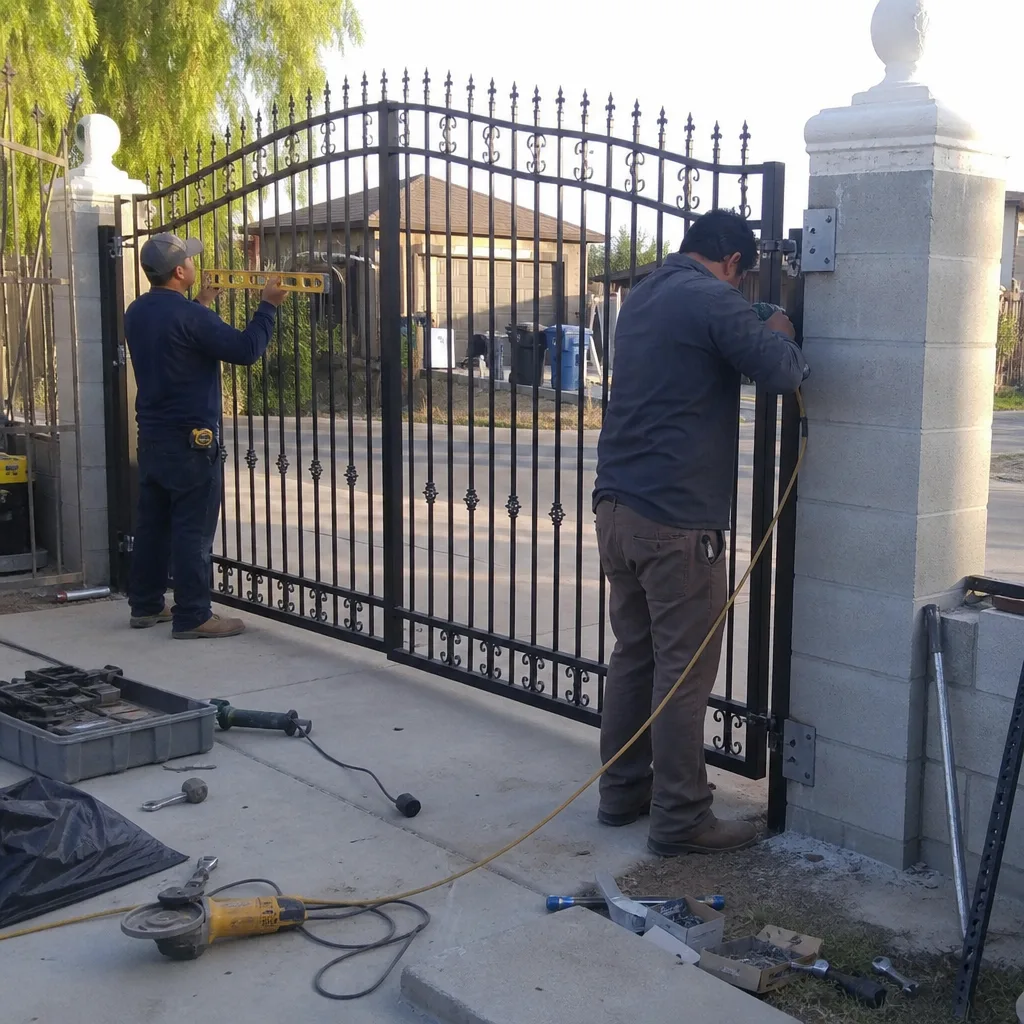
Permit questions are usually answerable with a phone call to the building department, but permit execution is not. If the job involves new wiring, a new operator, a structural change, or a gate that crosses a property line or easement, hire a licensed contractor who does gate work specifically. The contractor should be willing to put the permit determination in writing before the work starts, should pull the permit in their name, and should leave you with the final inspection sign-off and a documented record of the work. If a contractor refuses to pull a permit on a job that clearly requires one, that’s not a cost-saving shortcut. That’s a problem you’ll inherit. Vance Gate Repair West Covina offers free estimates in West Covina, and if a permit is required, we’ll say so in the written price. Call (562) 368-4485 with the details of your gate and we’ll tell you what the code requires for your specific situation.
Frequently Asked Questions
No, most repairs to an existing gate do not require a permit in West Covina. Replacing hinges, wheels, springs, circuit boards, remote receivers, or making frame repairs on a gate that already exists and already has an operator falls into the maintenance category. If the repair changes the electrical wiring or installs a motor where no motor existed, a permit is required. For help spotting trouble early, see Gate Repair Warning Signs: A West Covina Homeowner’s Reference Guide.
Residential electrical permits for gate operators in West Covina generally run between $150 and $400, depending on the scope and the valuation of the work. The permit fee is separate from the inspection fee, which may be included or added depending on the permit type. The permit cost is small compared to the cost of legalizing unpermitted work later.
If the gate already has an operator and you are replacing it with a like-for-like unit that does not require new wiring, you may be able to do the work without a permit. If the gate has never had an operator or you are running new wiring, the work requires a permit, and the entrapment protection must be tested by someone who knows UL 325. The DIY operator kits sold at hardware stores are not exempt from the permit requirement.
A straightforward residential electrical permit for a gate operator can often be issued within five to ten business days in West Covina, assuming no plan check is triggered. If the job involves structural work or a variance, the timeline can extend to several weeks. HOA review timelines run separately and can be shorter or longer than the city timeline, depending on the association’s meeting schedule.
You can, but the unpermitted operator must be disclosed on the seller’s disclosure forms, and the buyer’s inspector will typically flag it during the inspection contingency. In practice, the cost of legalizing the operator is negotiated at close and often comes out of the seller’s proceeds. Having the permit and inspection sign-off closes the issue before it becomes a negotiation point.
A gate inspection checks the electrical wiring and grounding, the UL 325 entrapment protection systems, the manual release mechanism, the warning signage, the disconnect means, and, when applicable, the gate’s height and setback against the approved plans. The inspector will test the gate’s operation and the safety devices in person. A failed inspection means a correction, a re-inspection fee, and another appointment. Call (562) 368-4485 for a free estimate, and we’ll tell you what your gate needs before the inspector arrives.
The Bottom Line
Gate repair permits in California are a narrow issue with sharp edges. A repair that restores a gate to its original design and wiring does not need a permit. A replacement that changes the wiring, adds a motor, or alters the structure does. HOA approval runs on a separate clock, and skipping it can cost more than skipping the city. The documentation you keep matters as much as the permit itself: the signed-off permit, the inspection record, and the written scope of work are the evidence that protects you at resale. If the job is a repair, get it done well through our Gate Repair services. If it’s an installation, get it permitted. The cost of getting it right is a fraction of the cost of explaining it later.
Written by Adrian Vance, Owner at Vance Gate Repair West Covina, serving West Covina since 2014.