
Last updated September 20, 2026
Free on-site gate assessment - hinges, posts, and your LiftMaster or Nice gate operator checked before anything is quoted
The assessment is free and the quote is the invoice.
Farm & ranch
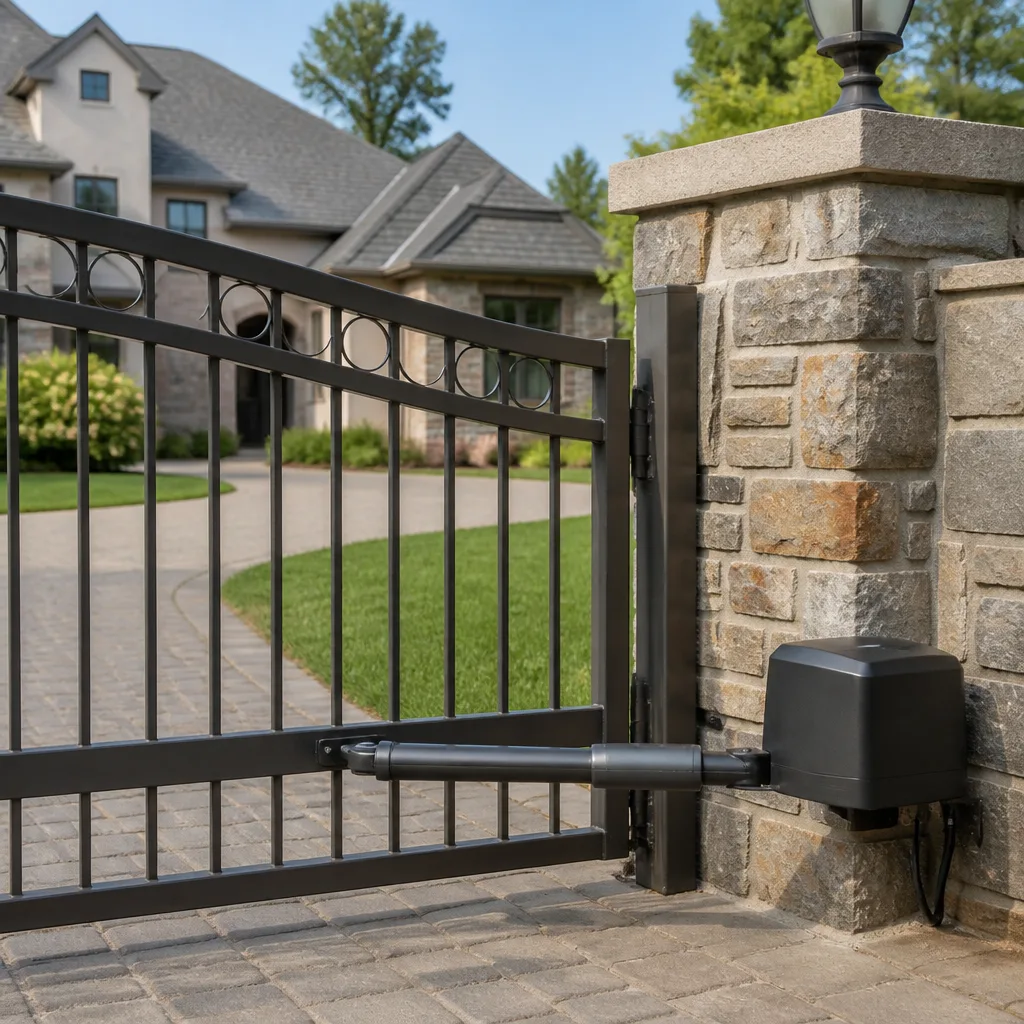
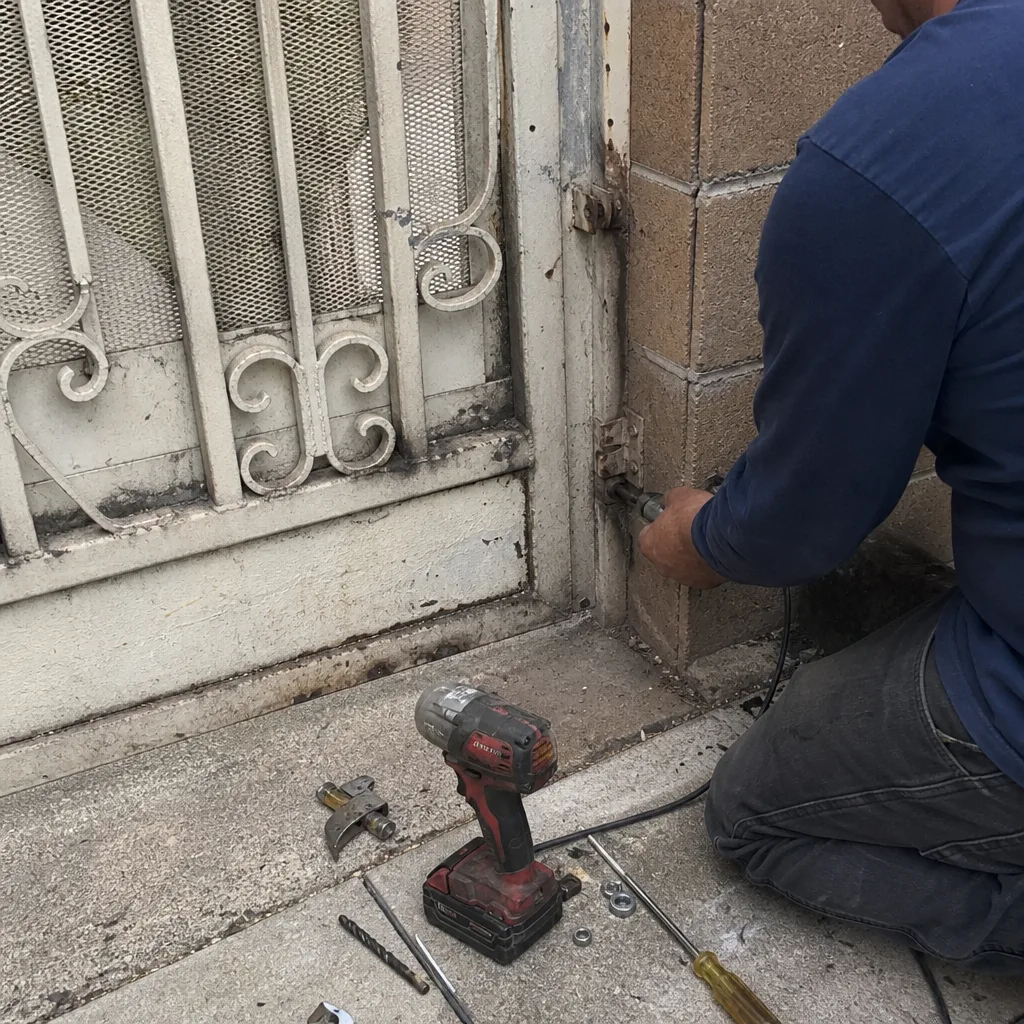 Before
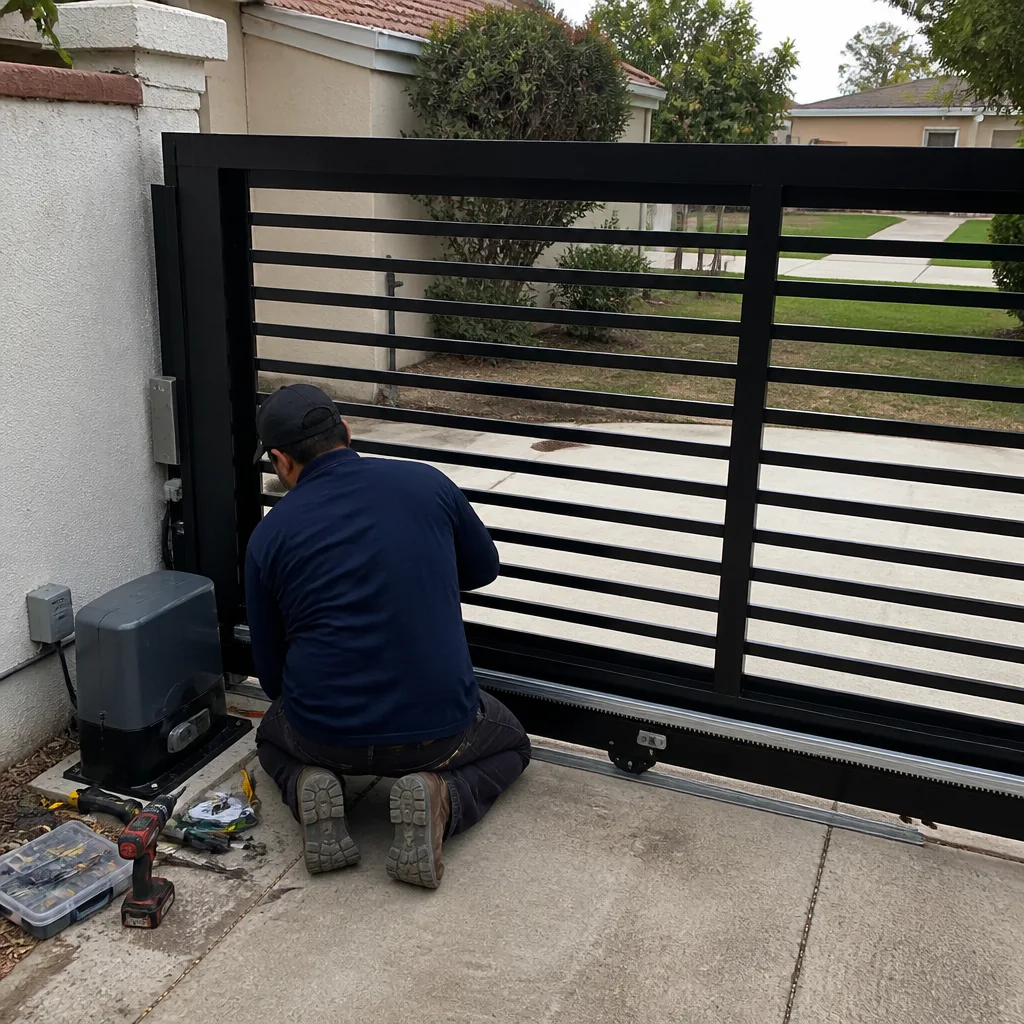 After
After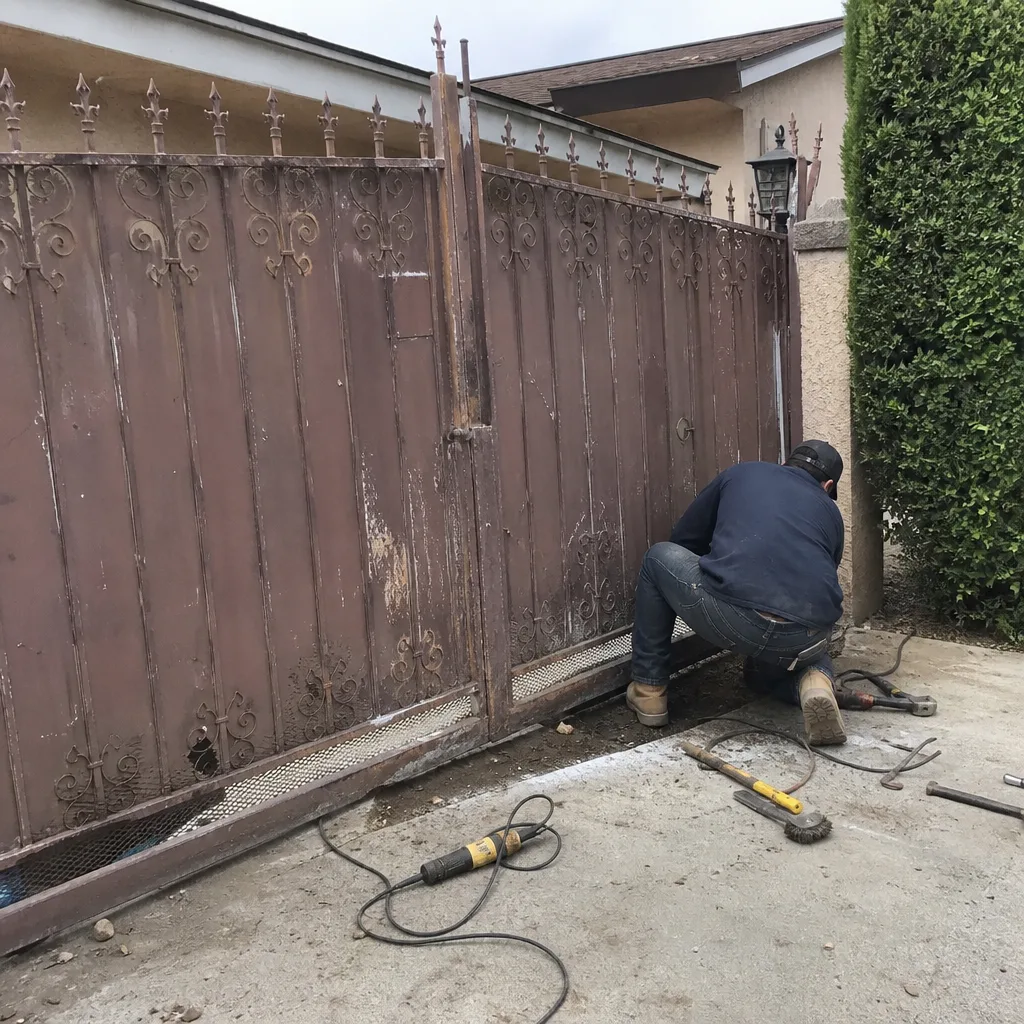 Before
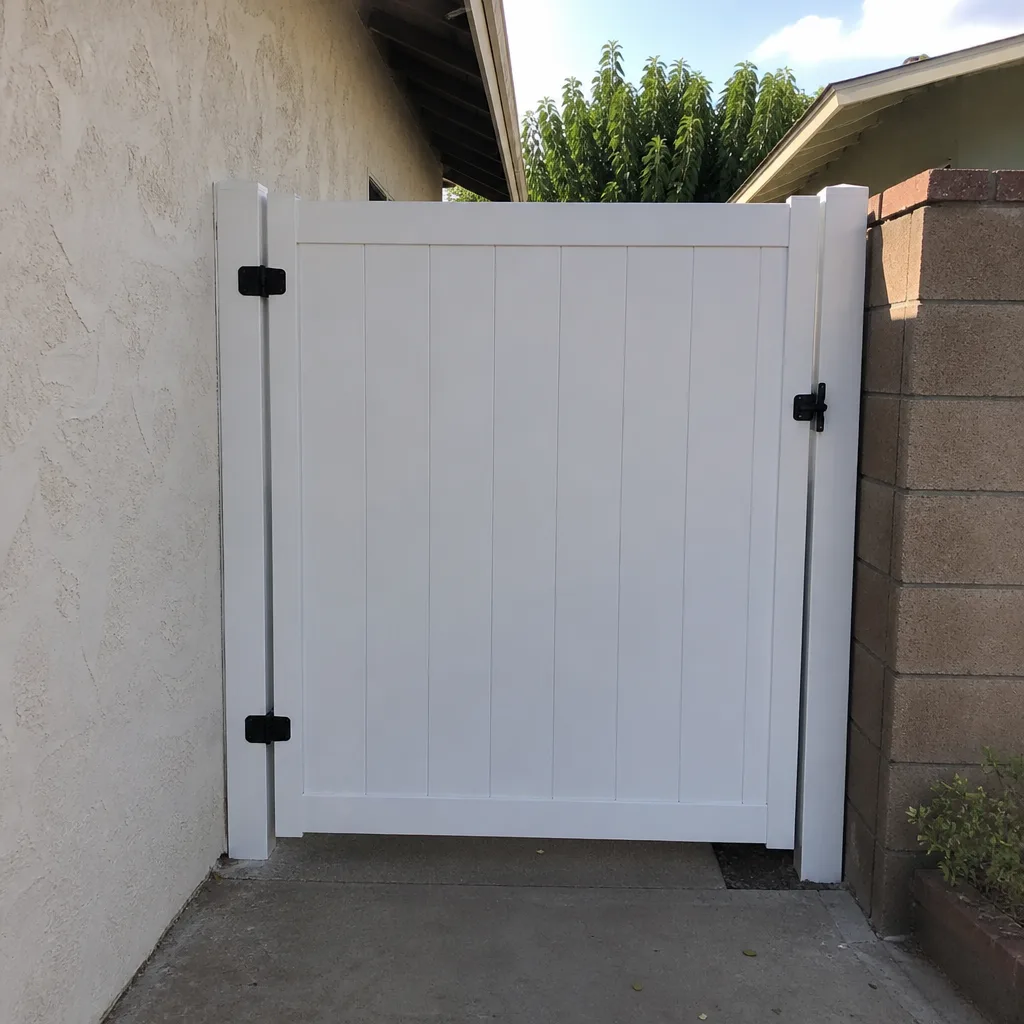 After
After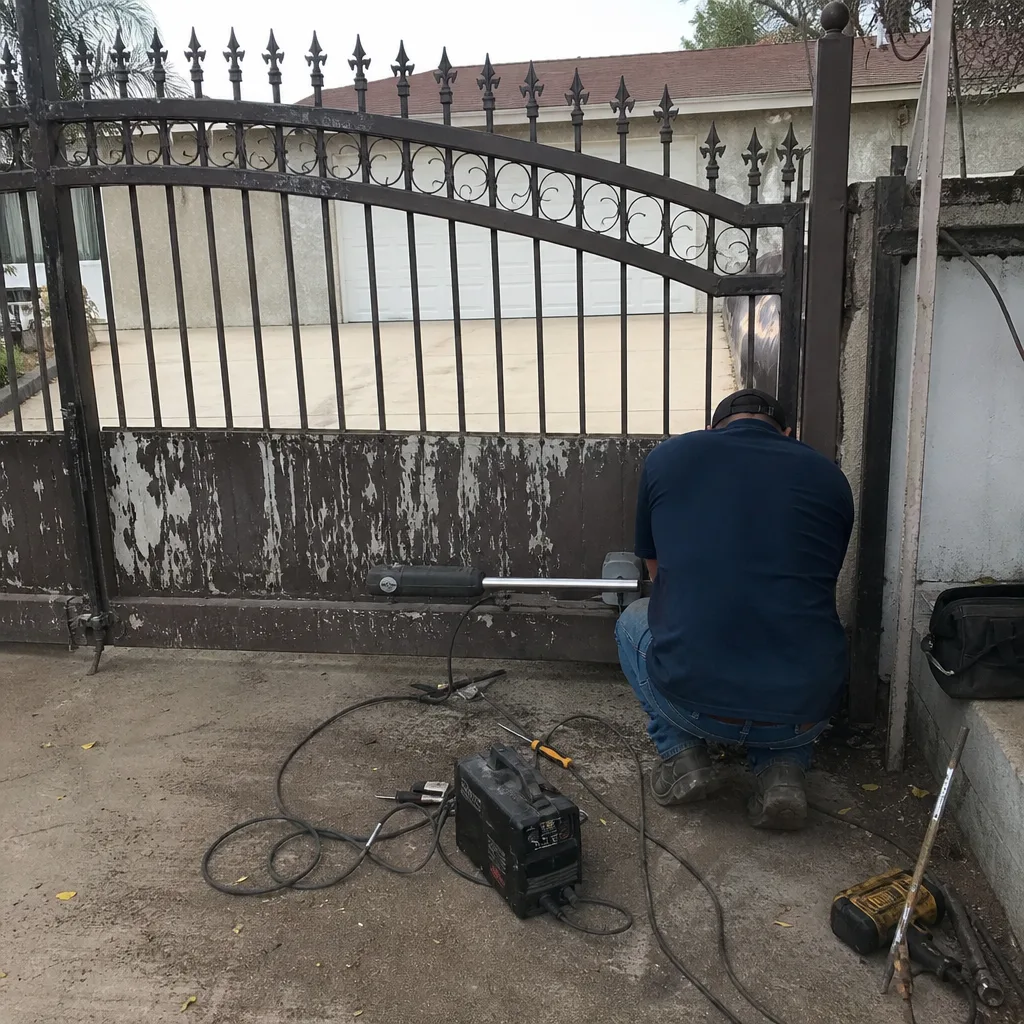 Before
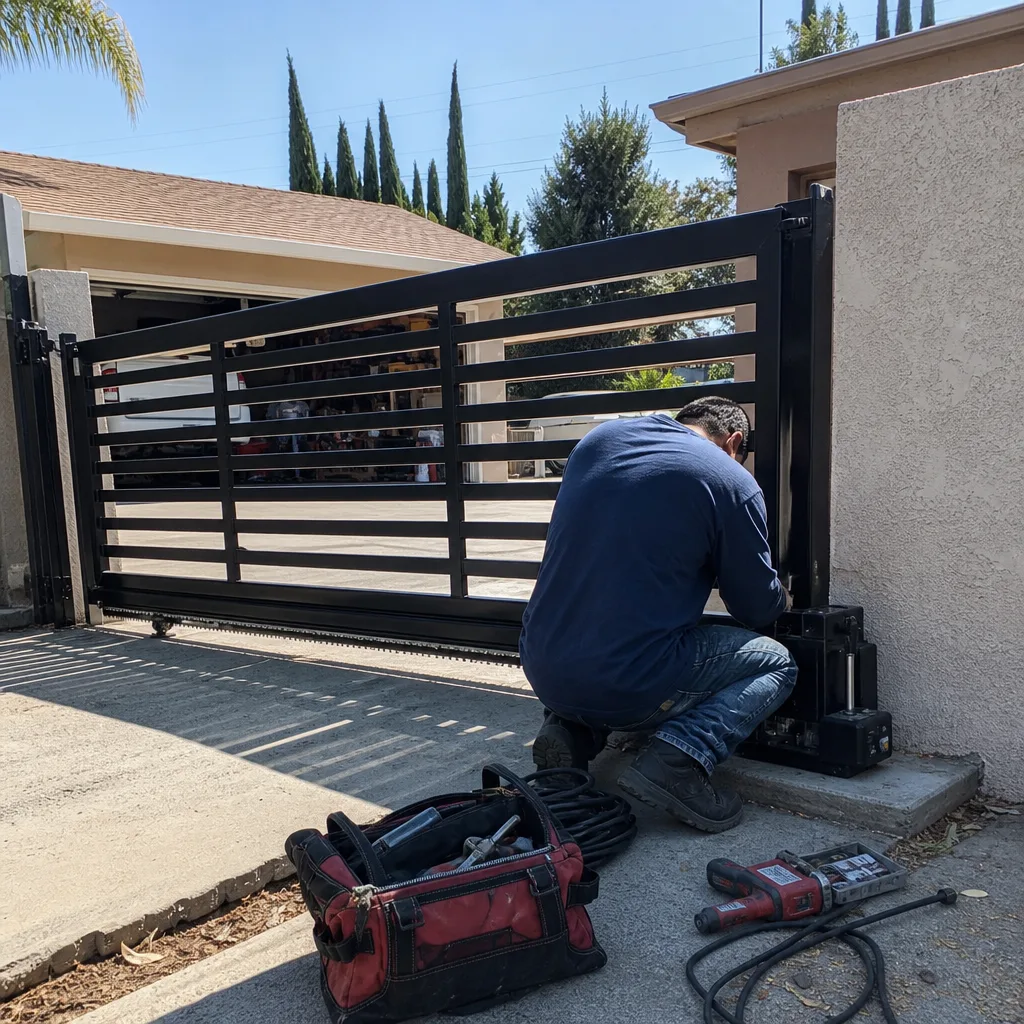 After
AfterGate Repair Warning Signs: A West Covina Homeowner’s Reference Guide
A gate that pauses mid-travel and then continues isn’t a minor inconvenience. It’s a limit switch reading that has drifted into the entrapment zone, and in California, that specific failure pattern is exactly what UL 325 was written to prevent. Most homeowners in West Covina don’t discover their gate is failing until the day it refuses to open at all. This guide sorts every warning sign by urgency, names the component behind it, and tells you which signs mean stop using the gate today versus which ones can wait for a scheduled visit.
Quick Answer
The warning signs that demand immediate attention on a West Covina gate are: the gate reversing after hitting an obstruction, the gate failing to stop when it meets resistance, a grinding noise from the gearbox, visible cracks in the gate frame at hinge points, and any sparking or burning smell from the motor. Signs that can be scheduled within a month include slow travel speed, gate sag at the latch end, intermittent remote failure, and surface rust at welded joints. Every sign corresponds to a specific component: limit switches, photo-eyes, gearboxes, hinge plates, or capacitor banks. Knowing which is which tells you whether you’re calling for gate repair or calling for a gate that’s about to fall off its hinges.
Table of Contents
- Tier One: Stop Using the Gate Immediately
- Tier Two: Schedule Repair Within 30 Days
- Tier Three: Monitor at Next Maintenance Interval
- Operator Warning Signs vs. Structural Warning Signs vs. Wiring Warning Signs
- How to Read an Operator Error Log
- Which Warning Signs Void a Manufacturer Warranty
- West Covina Climate and Gate Wear Patterns
- Common Mistakes to Avoid
- When to Call a Professional
- Frequently Asked Questions
BeforeAfterTier One: Stop Using the Gate Immediately
Some warning signs are not warnings. They are failure events already in progress. When any of the following appear, put the gate in manual mode, lock it if you can, and call for a repair before the next cycle. We’re not being dramatic. The difference between a $400 limit switch repair and a $4,000 gate replacement in West Covina is frequently one additional operating cycle after the warning appeared.
1. The gate reverses after striking an obstruction, but then reverses again without stopping
UL 325 requires that when a gate encounters resistance, the operator reverses direction and stops. Some systems attempt a second close cycle automatically. If your gate hits an obstruction, reverses, and immediately tries to close again, the obstruction-sensing circuit has failed. The component responsible is typically an inherent entrapment sensor (the motor’s current monitor) that has lost calibration, or a failed limit switch that no longer tells the controller where the gate edge actually is. A child, pet, or vehicle in the gate path now relies on a component that has already proved it’s not doing its job. Stop using the gate. Disconnect the operator from the gate arm and secure the gate mechanically.
2. The gate does not reverse when it meets resistance at all
This is the worst-case scenario for any automatic gate. The gate closes on an obstruction and continues to push. On a swing gate with an articulated arm, you may hear the motor laboring. On a slide gate, you’ll hear the chain or belt fighting the obstruction. The most likely causes in our experience: a failed internal entrapment sensor in the motor (common on older Mighty Mule and Ghost Controls units in West Covina), or a photo-eye that has been miswired out of the safety circuit. If the gate cannot reverse on contact, the entire safety system has failed. This gate is not repairable by continuing to use it. It’s repairable by a technician with a meter and the UL 325 test matrix. In the meantime, the gate stays in manual.
3. Grinding, chattering, or squealing from the gearbox during travel
A gearbox that grinds is shedding metal. Every rotation scrapes gear teeth, washer shims, or worm-drive components into the lubricant. On LiftMaster and DoorKing slide gate operators, the sound usually indicates the drive gear has worn past its service life. On swing gate arms from FAAC or BFT, a squeal during travel often points to a failing planetary gear set. The reason this is Tier One: a gearbox failure mid-cycle can leave the gate suspended in the travel path, unable to complete its cycle and too heavy to move by hand without disconnecting the operator. That’s an emergency because the gate is now blocking the driveway. In West Covina, where many homes on the hillsides near Azusa Avenue and Barranca Street have gates on slopes, a suspended gate adds gravity to the risk equation. Stop running the gate.
4. Visible cracks at hinge welds, hinge plates, or gate frame corners
A gate is a structural assembly, not just a moving panel. When you see a crack forming at a hinge plate, the gate’s weight is now carried by less steel than it was built for. This is a structural warning sign, not a cosmetic one. On ornamental gates, cracks usually start at the weld where the hinge barrel meets the frame. On tubular steel gates, the lower corner opposite the hinge is the fail point. The gate may work fine today. But a cracked hinge plate under repeated cycles will eventually tear free. If the gate falls while moving, it’s not a repair issue anymore. It’s a crush hazard. We’ve replaced gates in West Covina that fell after hinge cracks were ignored for months. The repair price tripled.
5. Sparking, smoking, or a burning smell from the operator box
Automatic gate operators run on 120V or 240V, and inside the box sits a capacitor bank, a transformer, and a control board. Any burning smell means something in that enclosure is cooking. The typical culprits are a swollen capacitor, a shorted transformer, or a relay that has fused closed. The gate may continue to operate. That’s the trap. A failing capacitor can leak electrolyte onto the control board, and the repair expands from a $140 capacitor swap to a full board replacement. Sparking from the operator is not a “monitor it” situation. Kill power to the operator at the breaker and call for service.
Tier Two: Schedule Repair Within 30 Days
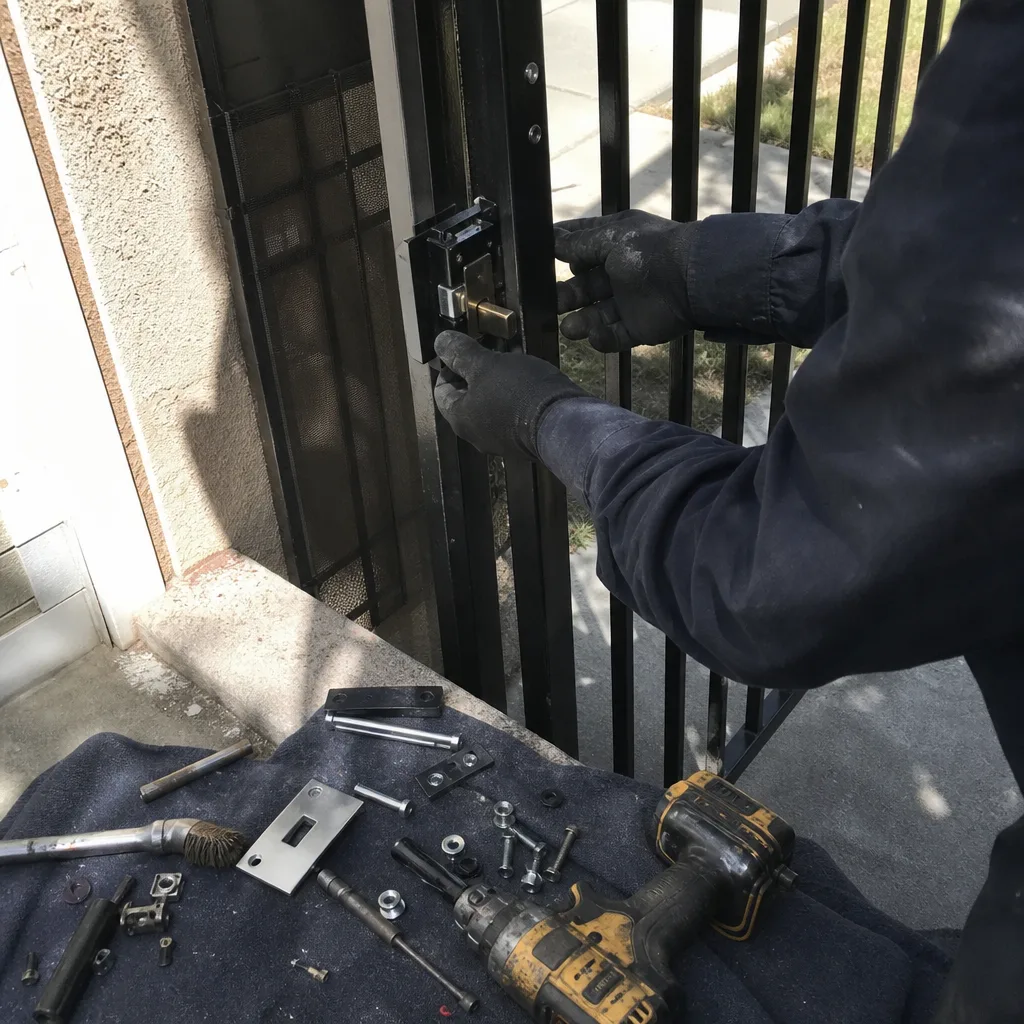
These signs mean something is degrading. Left long enough, they migrate to Tier One. Thirty days gives you room to schedule a visit without operating an unsafe gate every day.
1. Slow travel speed with no explanation
A gate that opens noticeably slower than it did six months ago has either a weakening capacitor (on single-phase operators), a slipping belt, low hydraulic fluid (on piston-drive arms), or degraded drive gear lubrication. The gate still runs. It may run slower for months. But each cycle under increased load draws more current through the motor windings, and the motor eventually fails. In our experience across West Covina, slow-travel complaints on Elite and Linear slide operators are most often capacitor degradation. It’s a $120-$180 fix if caught early, and a motor replacement if ignored.
2. Gate sag at the latch end
A swing gate that has dropped half an inch at the latch end is telling you the hinge bushings have worn, the hinge post has shifted, or the gate frame has relaxed at the weld joints. You’ll notice the latch not lining up with the strike plate, or the gate needing a lift to close fully. This is not an operator problem. It’s mechanical. Left unchecked, the gate weight shifts, the operator arm fights an out-of-balance panel on every cycle, and the arm’s internal gears wear prematurely. Replacing hinge bushings before the damage travels into the operator is far less expensive than rebuilding an arm drive.
3. Intermittent remote failure with no pattern
If the remote works at 8 a.m. but not at 8 p.m., and replacing the battery doesn’t fix it, you may have a failing receiver module in the operator. On LiftMaster operators, this is commonly a cold-solder-joint failure on the receiver board. It could also be RF interference from new wireless equipment in the neighborhood. West Covina has dense residential blocks where a neighbor’s new mesh Wi-Fi, wireless security system, or LED landscape transformer can interfere with the 312MHz or 318MHz band your remote uses. If the issue persists across multiple remotes and fresh batteries, the next step is checking the operator’s receiver and antenna with a signal meter, not replacing more remotes.
4. Surface rust at welded joints with paint bubbling
Rust on a West Covina gate is rarely just cosmetic. The city sits far enough inland to avoid marine fog, but uphill homes near the Puente Hills get stronger sun exposure that breaks down powder coating faster than beach-adjacent cities. When paint bubbles at a weld joint, moisture has entered the joint itself. The steel is oxidizing from the inside. Treating this before the metal thins is a sandblast-and-recoat job. Waiting until the metal fails is a welded-panel replacement. Rust at a weld, especially on the bottom rail where water pools, is a scheduled repair, not a maintenance item.
Tier Three: Monitor at Next Maintenance Interval
These signs don’t demand action today. But they are data points. A good gate maintenance visit in West Covina should document them so they can be compared at the next check.
1. Minor vibration during travel
Light vibration on a steel gate is usually roller wear on slide gates or hinge bushing play on swing gates. If the vibration doesn’t worsen month over month, it can wait for the next scheduled service. Document the vibration level now so there’s a baseline. A technician can compare it at the next maintenance and identify whether it’s static or progressing.
2. Slight noise from the limit switch cam
As mechanical limit switches age, the cam follower can wear and create a soft clicking sound at the travel endpoints. This is normal wear. It becomes a repair when the operator starts overrunning the limit (opening too far or slamming the post).
3. Loose hinge pin covers or decorative caps
Purely cosmetic, but worth noting. Missing caps expose the hinge pin to moisture, accelerating rust at the pivot. A $15 cap replacement now avoids a $400 hinge rebuild later.
4. Photocell lens clouding
Photo-eyes get dirty. Their lenses are small and sit a foot off the ground where dust, irrigation overspray, and spider webs accumulate. Clouded lenses can cause false obstruction trips. A quick wipe with a dry cloth at maintenance intervals is often all that’s needed. If clouding returns quickly after cleaning, the photo-eye housing seal has failed and water is entering. That’s Tier Two.
Operator Warning Signs vs. Structural Warning Signs vs. Wiring Warning Signs
Most gate guides mix these categories together, which makes diagnosis harder than it needs to be; for more guides & resources, see our blog. A grinding sound and a sagging gate are completely different problems in completely different systems. Sorting signs by subsystem narrows the search from “something’s wrong with my gate” to “something’s wrong with this component.”
Operator warning signs (motor, gearbox, capacitor, control board)
- Grinding, squealing, or chattering during travel: gearbox or motor bearing wear
- Slow travel speed: weakening capacitor or belt slip
- Gate stops mid-travel and reverses: limit switch drift or entrapment sensor fault
- Operator runs but the gate doesn’t move: shear pin failure or drive gear stripped
- Burning smell from the operator: capacitor or transformer failure
- Remote works inconsistently across all remotes: receiver module or antenna failure
Structural warning signs (frame, hinges, wheels, track)
- Gate sag at latch end: hinge bushing or bearing wear
- Cracks at weld joints: metal fatigue from repeated load cycles
- Vibration during travel: worn rollers on slide gates, hinge play on swing gates
- Gate leans toward one side: post movement, concrete pad shifting, or frame deformation
- Rust at bottom rail seams: internal corrosion from trapped moisture
Wiring warning signs (low-voltage, control, safety circuit)
- Intermittent operation with no mechanical pattern: loose terminal or corroded connection
- Gate trips but no obstruction present: photo-eye misalignment or lens clouding
- Operator displays fault codes that reset after power cycle: control board brownout or failing relay
- Remote requires closer distance than before: antenna or receiver ground issue
The reason this separation matters: a wiring problem does not get fixed by replacing the motor. And a hinge problem does not get fixed by reprogramming the control board. When you call a gate repair company in West Covina and describe a symptom from the structural list, a competent tech arrives ready to inspect metalwork, not tote a new circuit board. For help choosing the right professional, read How to Hire a Gate Repair Contractor in West Covina: A Step-by-Step Guide. Knowing the category gets you to the right fix faster and for less money.
How to Read an Operator Error Log
Some warning signs never make a sound. They show up as fault counts in the operator’s internal memory. Modern gate operators from LiftMaster, DoorKing, and Elite log error events: failed close cycles, obstruction trips, limit overruns, thermal shutdowns. Homeowners rarely check these logs. That’s a miss, because the log is the most objective warning system the gate has.
Here’s how to access the log on common West Covina operators:
- LiftMaster (LA series or LA400/LA500): Open the operator cover and look for the diagnostic display. Press the “Learn” or “Diagnostics” button to cycle through stored fault codes. Codes like “31” (obstruction detected) or “24” (thermal protection) are stored events that have already occurred. A single logged obstruction is normal. Twenty logged obstructions in a week means the safety system is tripping repeatedly and needs attention.
- DoorKing: DoorKing operators with a digital display show a fault code when an event occurs, but the log is cleared when the operator is reset. The sequence matters: watch the display during operation for immediate codes. Some newer DoorKing boards have an internal event counter accessible through the programming menu.
- Elite: Elite slide operators with the Apex board store fault history. Press and hold the “Enter” button for three seconds to enter fault review mode. The display scrolls through stored events in reverse chronological order.
What to look for in any log: repeated thermal shutdowns (motor overheating), repeated obstruction trips with no visible obstruction (photo-eye misalignment or failing safety edge), and repeated limit overruns (limit switch failing). Any single event is an anomaly worth noting. A repeating pattern is a component failure in progress.
If the operator doesn’t display fault codes, or you can’t access the log safely without opening a cover you’re not comfortable with, that’s fine. The log doesn’t replace a physical inspection. But when a gate repair technician in West Covina arrives, asking them to pull and interpret the error log is a reasonable request. It’s also the fastest way to find intermittent problems that don’t reproduce on demand.
Which Warning Signs Void a Manufacturer Warranty
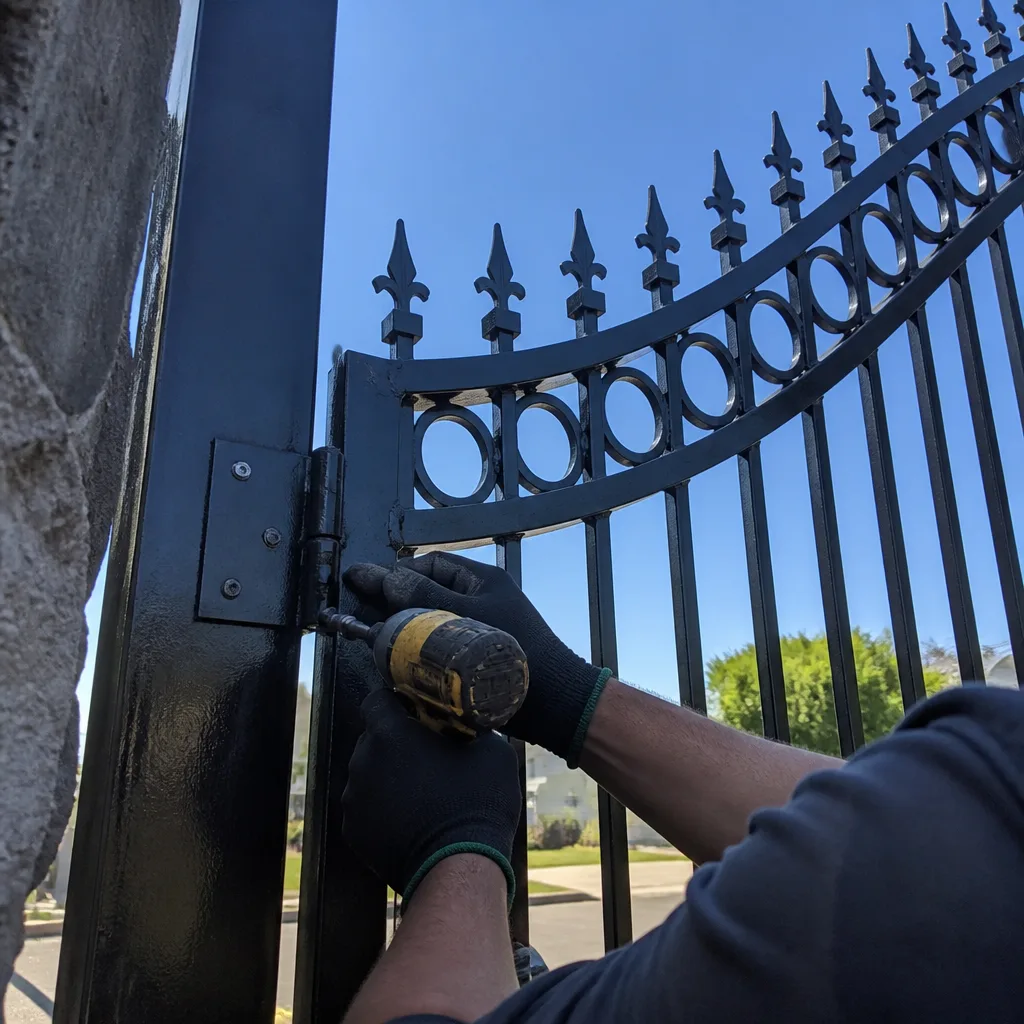
This is a section that most guide writers skip because it’s unglamorous. But the practical financial consequence of ignoring a warning sign is not the repair cost. It’s the voided warranty. Most gate operator manufacturers have explicit language in their warranty documents stating that failure to address known defects, or operating a gate with a known safety fault, voids coverage.
- Operating a gate with a failed photo-eye or entrapment sensor. LiftMaster’s warranty documentation, for example, specifies that the operator must be installed and operated with functioning external entrapment protection. If you continue to run the gate after the photo-eye fails, and the motor later burns out because it was repeatedly stalling against an obstruction, the warranty claim for the motor will likely be denied. The failed safety device is documented by the symptom trail.
- Continued operation with a mechanical gearbox noise. A grinding gearbox is self-destructing. If you run it until the gate stops moving entirely, the operator has been destroyed by preventable wear. Warranty departments classify this as neglect, not a manufacturing defect.
- Continued operation with visible frame cracks or hinge failure. This one affects the gate itself. Many gate fabricators include weld durability language in their warranty terms. If you operate a gate with cracked hinges and the gate detaches and falls, the structural warranty is void. The failure stemmed from continuing to operate a known-damaged structure, not from a defect in original workmanship.
- Using an incompatible remote or aftermarket circuit board. Some warranties are voided by third-party electronics. If the wrong control board went in, and the motor then failed, the manufacturer walks away.
The practical takeaway: a $280 hinge bushing replacement now protects a $2,500 motor replacement later, and it keeps the warranty alive. When in doubt, document the warning sign, stop operating the gate if it’s a Tier One issue, and call a gate motor and opener specialist in West Covina. The paper trail is part of the protection.
West Covina Climate and Gate Wear Patterns
West Covina sits in the San Gabriel Valley’s inland corridor, about 22 miles east of downtown Los Angeles. The climate here is warmer and drier than coastal LA, but with sharp seasonal contrasts: hot, dry summers with UV levels that break down powder coating, and fall Santa Ana wind events that blow fine dust and grit into every mechanical gap. These conditions create a specific wear signature on residential gates.
UV degradation of powder-coated steel
West Covina averages over 280 days of sun annually. On south-facing gates, especially homes near the Woodside and South Pointe neighborhoods, powder coating chalks and thins within five to seven years. Once the coating fails at a weld line, rust begins. This is why painted gates in West Covina show weld-joint rust patterns earlier than identical gates in shaded areas or coastal communities with less UV exposure.
Dust accumulation on slide gate tracks
Santa Ana winds push fine dust into the V-track and roller assemblies of slide gates. Homes on canyon-adjacent streets, particularly in the hillside areas east of Azusa Avenue, accumulate track debris faster than valley-floor homes. The dust accelerates roller bearing wear and clogs the gap between the track and the roller. The warning sign is a gate that moves with a slight wobble or creates a soft grinding noise only during the dry months. If the noise disappears after rain, that confirms track debris, not gearbox problems.
Thermal cycling on capacitor-driven operators
Summer temperatures in West Covina regularly hit the mid-90s. The inside of a dark-painted operator box on an unshaded wall can reach 130°F or higher. Electrolytic capacitors in single-phase operators degrade faster under sustained heat. That’s why slow-travel complaints spike in August and September. A capacitor that measured acceptable on a cool spring day is on its way out by late summer. This thermal cycling signature is worth noting in a maintenance plan: if you’re scheduling for summer travel speed, expect to address capacitors more often than a coastal homeowner would.
None of this changes the warning-sign categories. It just explains why some West Covina gates degrade on an accelerated schedule. A gate in a shaded West Covina cul-de-sac and the same gate in full sun on a hillside are two different maintenance realities. For more on the full scope of service in this area, see our gate installation page for West Covina homeowners.
Common Mistakes to Avoid
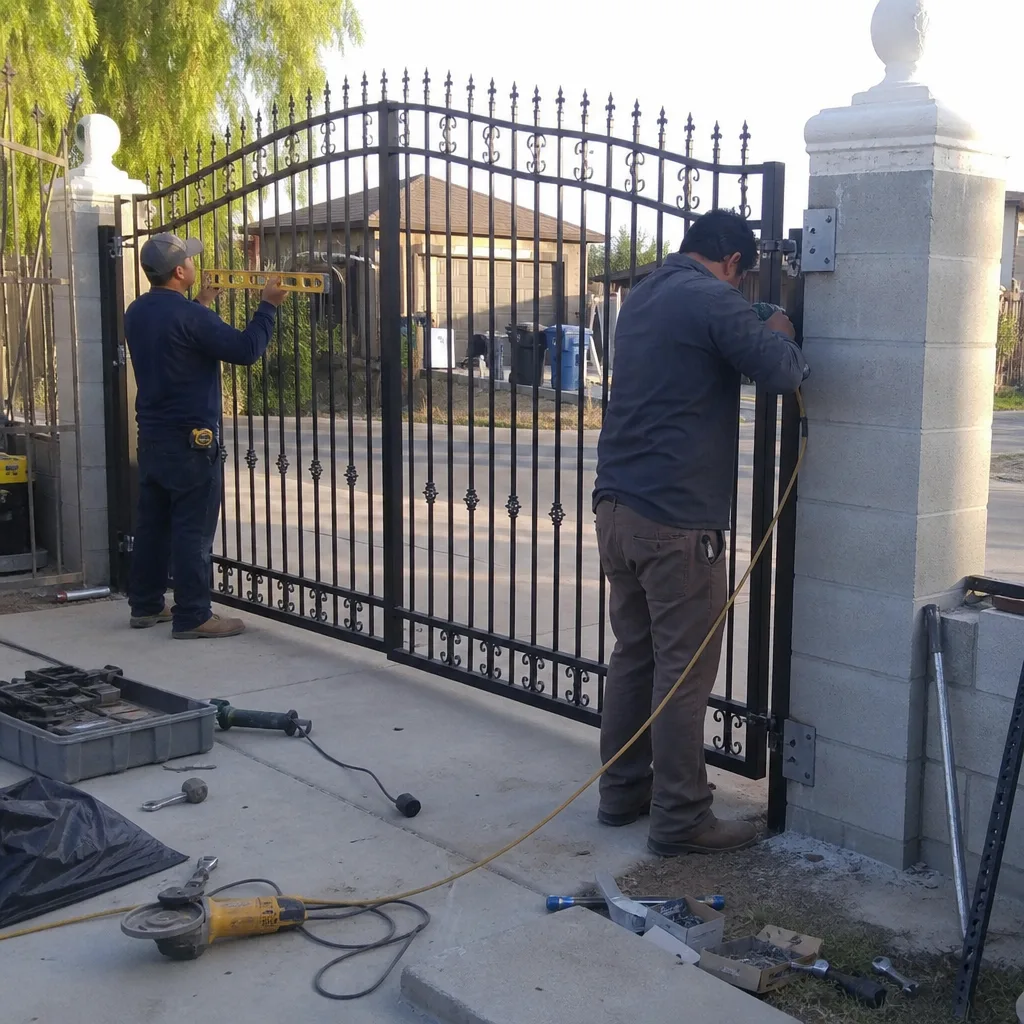
- Manually forcing a stuck gate with the operator still engaged. If the gate won’t move, disconnect the operator from the gate arm before trying to move the panel by hand. Forcing a gate against a locked gearbox can strip the drive gear and destroy a repairable operator. This is the number-one self-inflicted damage we see in West Covina.
- Pressing the remote repeatedly when the gate hesitates. Each press sends a new open or close command. If the gate is hesitating due to a safety-sensor mismatch, repeated commands can cause the controller to enter a fault state, locking the gate in an unsafe position. One press. Wait. Diagnose.
- Lubricating the gate hinges with WD-40 and calling it maintenance. WD-40 is a water displacer, not a lubricant. It flushes out the existing grease better than it lubricates. Hinges need a lithium-based or synthetic grease. The can belongs in the truck, not on the gate.
- Power-washing an automatic gate operator. High-pressure water pushes debris and moisture into the operator housing, the wiring connections, and the limit switches. If you’re cleaning the gate, avoid the operator box and the photo-eye housings. Let those be cleaned with a damp cloth or a dry brush.
- Ignoring a warning sign because the gate still opens. Every destroyed gate was still opening right up until the day it wasn’t. The warning signs exist precisely because the gate keeps working while the component fails. The gate working is not evidence that the gate is fine.
- Replacing a remote battery and assuming the problem is solved. If a new battery brings the remote back to life temporarily and the problem returns in a week, the issue is not the battery. It’s likely a failing receiver module, a damaged antenna, or RF interference. One battery replacement is reasonable. Three is a diagnostic clue, not a solution.
When to Call a Professional
The dividing line is simple: if the sign is Tier One, call before the next cycle. If the sign is Tier Two, call before the month is out. If the sign is Tier Three, document it and bring it up at the next maintenance visit. You don’t need to diagnose the component yourself. You need to know which tier the symptom belongs in so you know how much time you have. From there, the professional work begins.
Vance Gate Repair West Covina offers free estimates on gate repairs in West Covina, with a written price delivered before any work starts. If you’ve spotted a warning sign and you’re not sure which tier it falls into, call (562) 368-4485 and describe the symptom. A live person answers at any hour, and we’ll help you sort out whether the gate can wait for a scheduled visit or needs to be taken out of service today.
Frequently Asked Questions
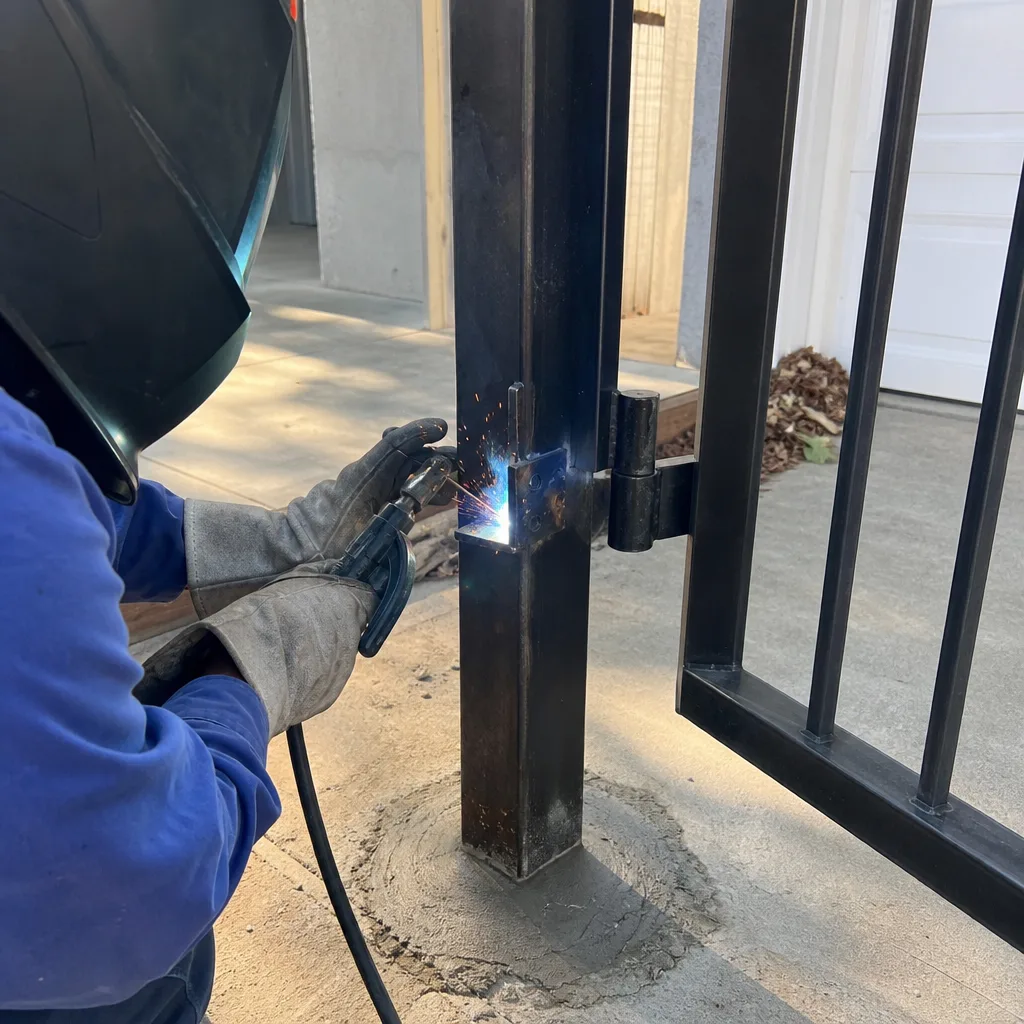
Most gate repairs in West Covina run between $180 and $650 depending on the component involved. A limit switch replacement is typically $180 to $320. A capacitor replacement runs $120 to $180. A hinge bushing replacement on a swing gate lands between $250 and $500. A complete operator motor replacement is typically $800 to $1,800 depending on brand and horsepower. Every repair at Vance Gate Repair West Covina includes a written price before work begins, so you know the cost before the job starts. Call (562) 368-4485 for an exact quote on your gate.
Yes, most common gate repairs in West Covina are completed the same day or within 24 hours. Limit switch resets, capacitor replacements, photo-eye realignments, and hinge bushing work are all same-visit repairs. Larger jobs like a full motor replacement may require a part that’s ordered from a distributor, which adds a day or two. When you call (562) 368-4485, we’ll tell you which situation you’re in before scheduling.
The most common causes are a misaligned photo-eye, a dirty photo-eye lens, or a failing safety edge sensor. When the photo-eye beam is broken by dust, spider webs, or slight housing movement, the controller interprets it as an obstruction and reverses the gate. If cleaning the lenses doesn’t fix the issue, the photo-eye housing may be cracked and taking on water. This is a Tier Two issue, meaning it should be scheduled within 30 days, but if the gate is reversing on every cycle, the safety circuit is compromised and it should be addressed sooner.
A gate repair addresses a specific failed component: a limit switch, a capacitor, a hinge bushing, a photo-eye. A gate motor replacement replaces the entire operator unit because the motor windings or gearbox have failed beyond economical repair. In many West Covina homes, the gate frame is perfectly fine and the motor is the only problem. A good repair company tells you which is which and shows you the evidence, rather than defaulting to a replacement.
We service LiftMaster, FAAC, BFT, Linear, Viking, Ghost Controls, DoorKing, Elite, and Mighty Mule operators, along with their accessories and safety devices. If your existing gate has a different brand motor, we can usually work with it as well. We don’t push replacement when repair is the more economical option. The operator’s parts availability and cost of the specific component determine whether a repair or replacement makes more sense.
For most West Covina residential gates, an annual service visit is sufficient. Gates on hillside properties with slide tracks or heavy exposure to Santa Ana dust may benefit from a six-month track and roller service. During a maintenance visit, we check limit settings, photo-eye alignment, capacitor condition, gearbox lubrication, hinge bushings, and structural weld integrity. Each visit includes a written record and photo documentation so you can track wear patterns over time. Call (562) 368-4485 to schedule a service visit.
The Bottom Line
Gate warning signs are not all the same. Sorting them by urgency is the difference between a $280 repair and a $3,000 replacement. Tier One signs mean the gate is unsafe or actively failing: entrapment sensor faults, gearbox grinding, structural cracks, electrical smells. Stop using the gate and call for service. Tier Two signs are degrading failures: slow travel, gate sag, intermittent remote issues, joint rust. They can wait for a scheduled visit within a month. Tier Three signs are wear trends to document and compare at the next maintenance visit. Knowing which tier you’re looking at tells you how much time you have and what component is likely involved. In West Covina, where sun, dust, and heat accelerate gate wear, that knowledge pays for itself.
Written by Adrian Vance, Owner at Vance Gate Repair West Covina, serving West Covina since 2014.