
Last updated September 20, 2026
Free on-site gate assessment - hinges, posts, and your LiftMaster or Nice gate operator checked before anything is quoted
The assessment is free and the quote is the invoice.
Farm & ranch
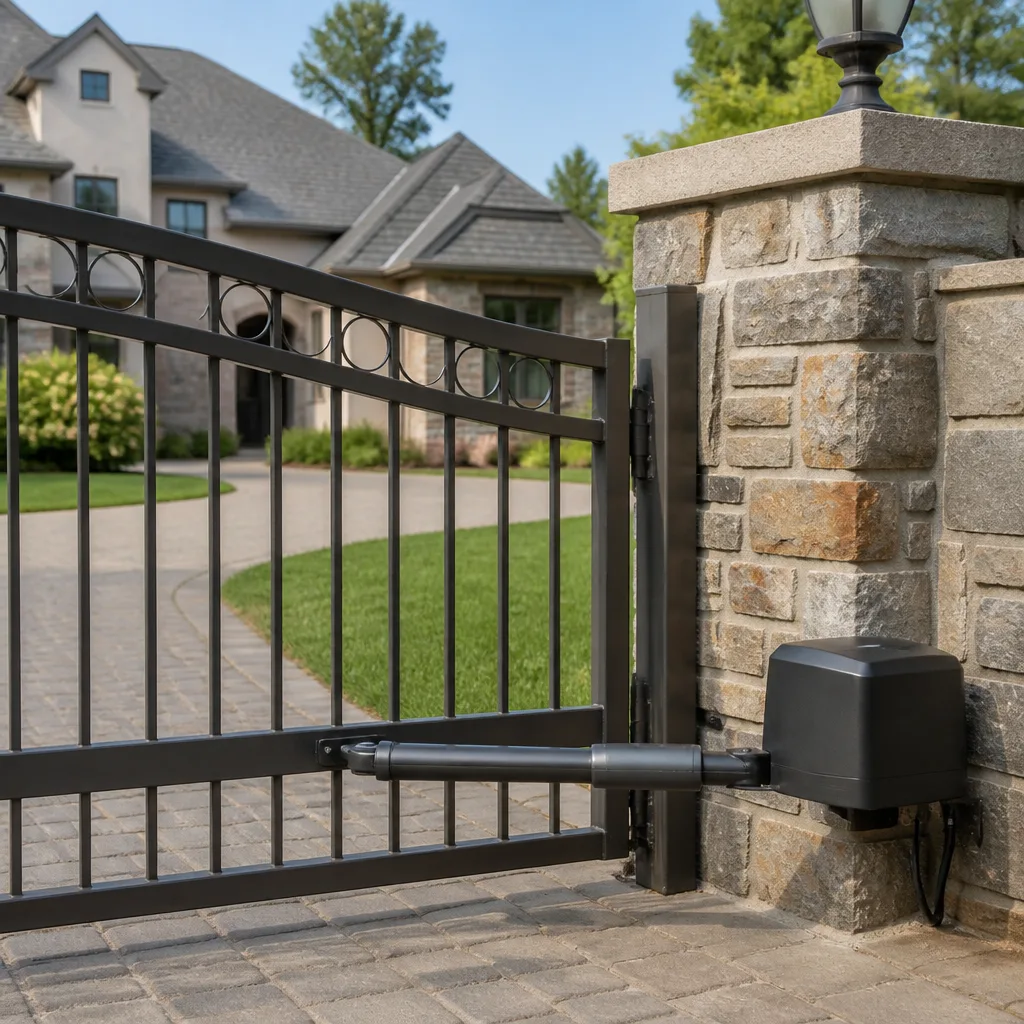
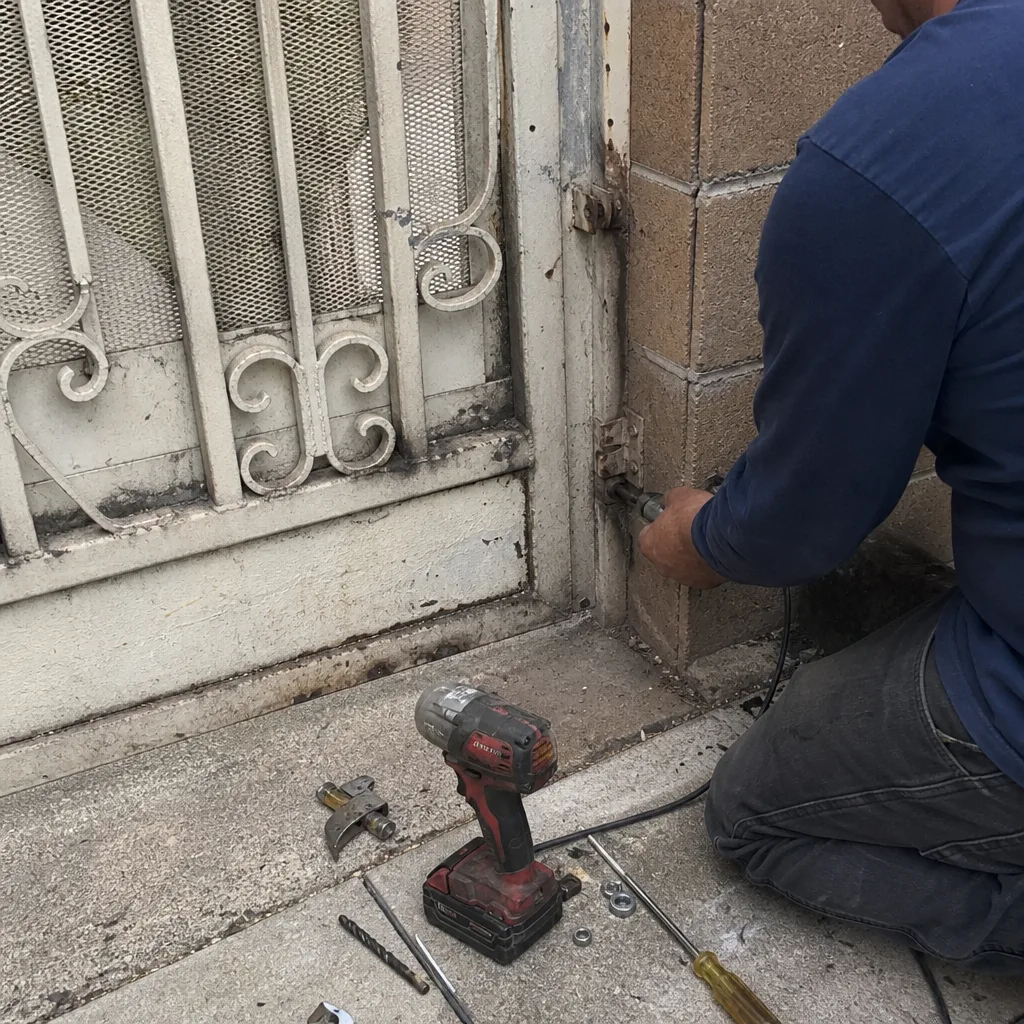 Before
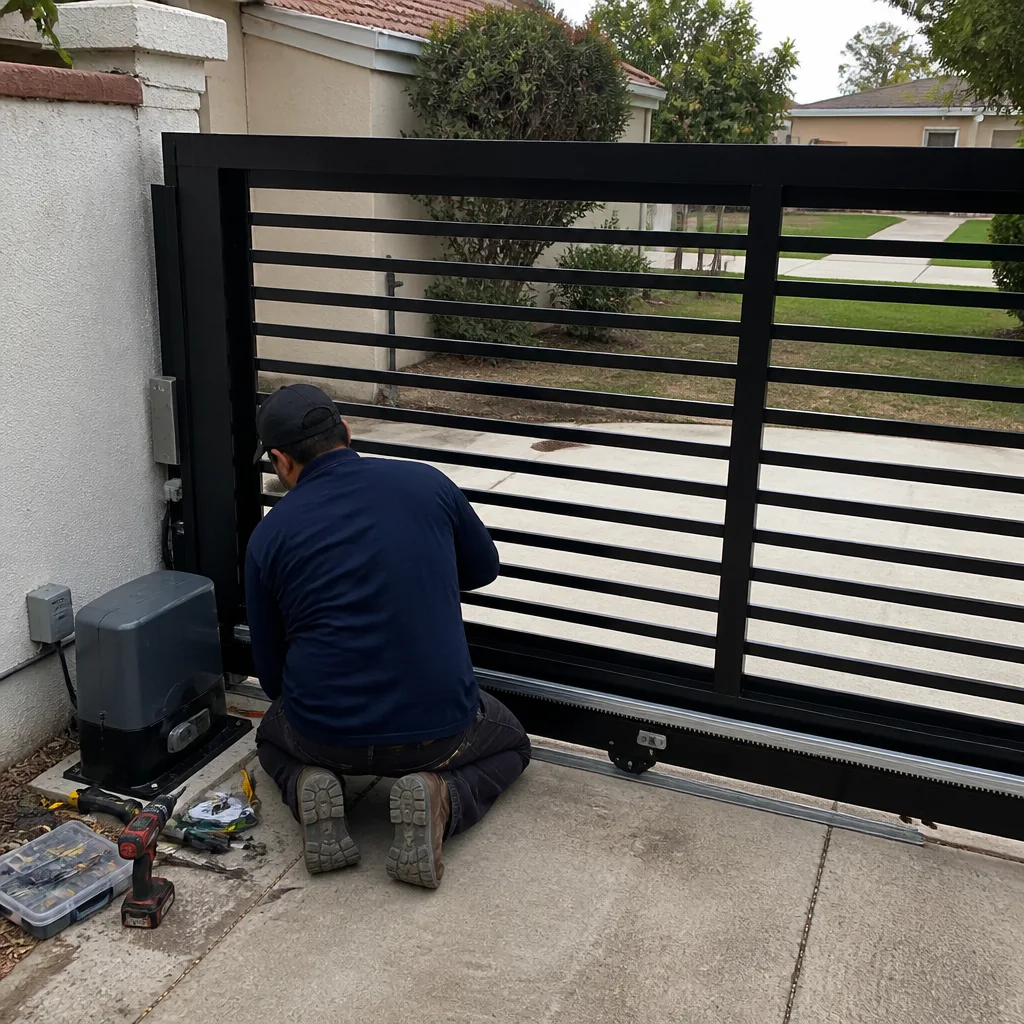 After
After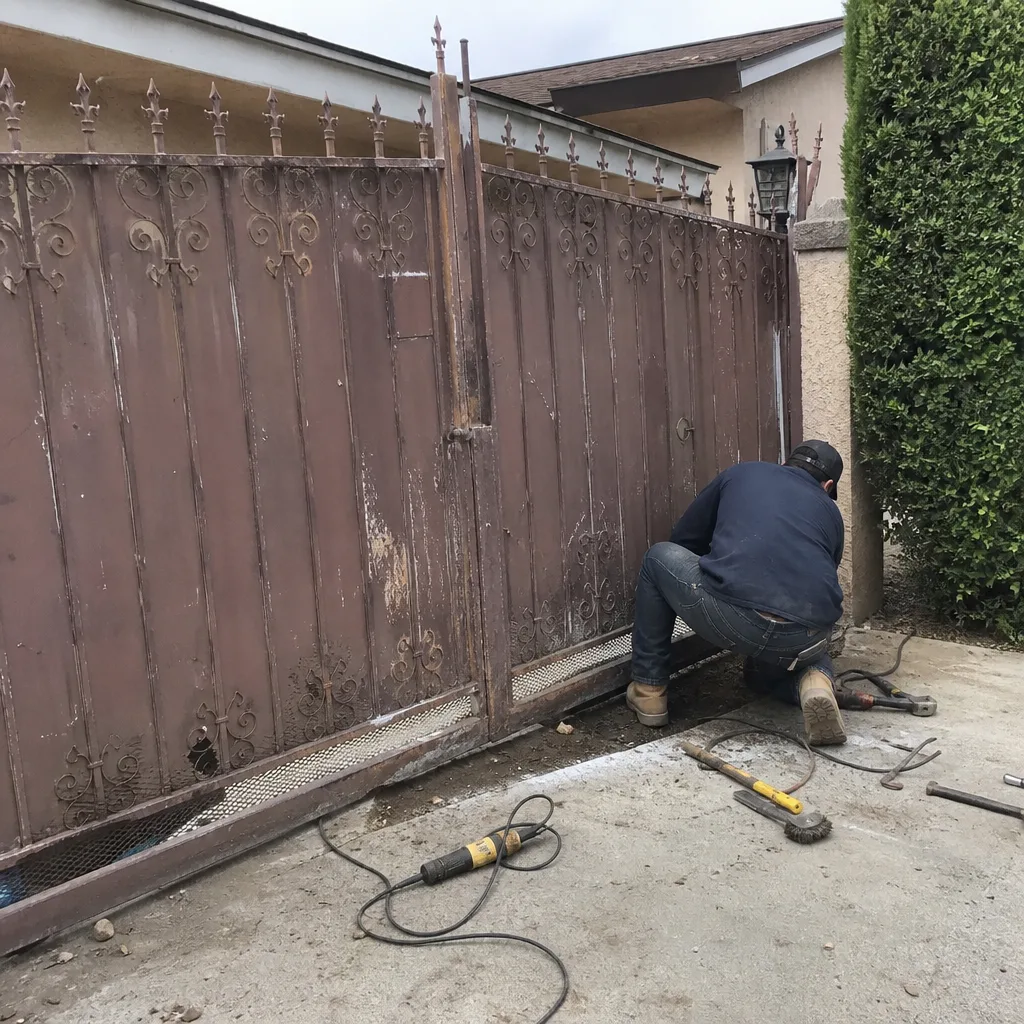 Before
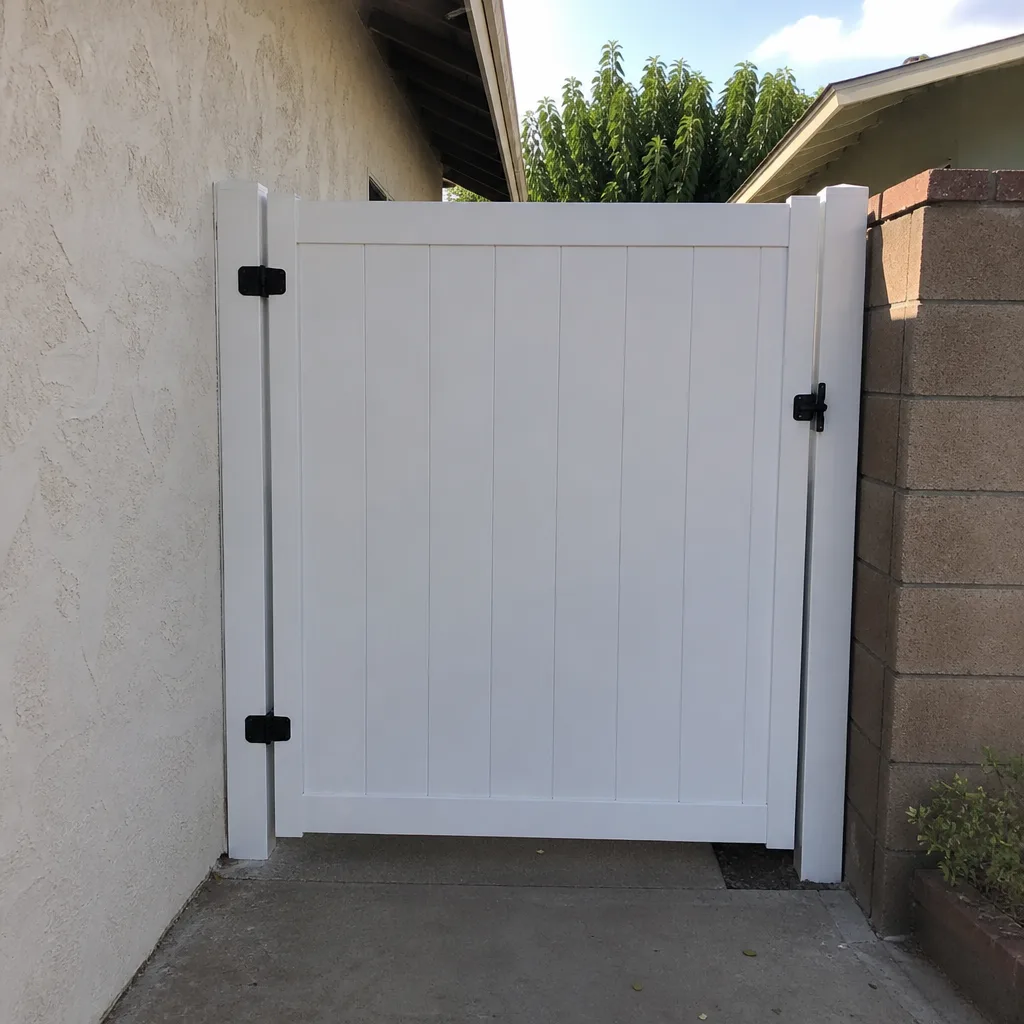 After
After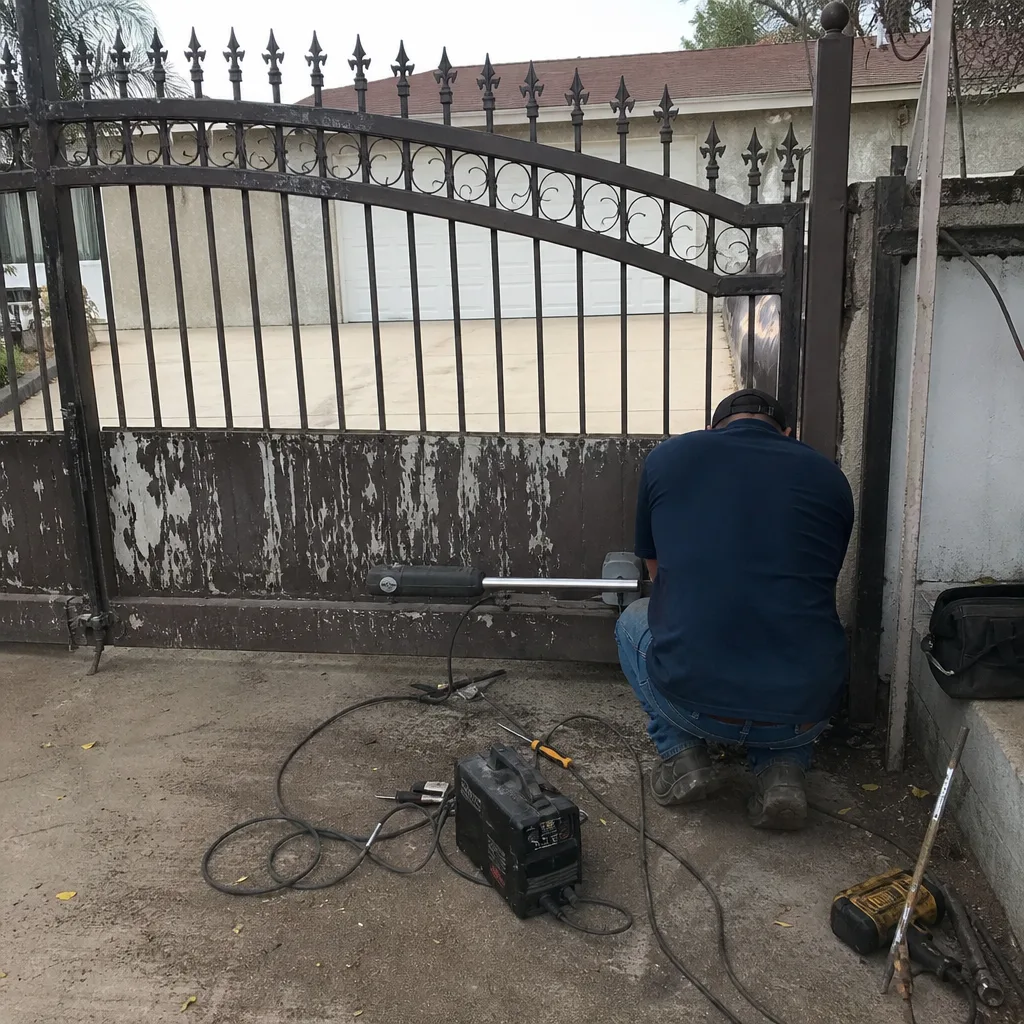 Before
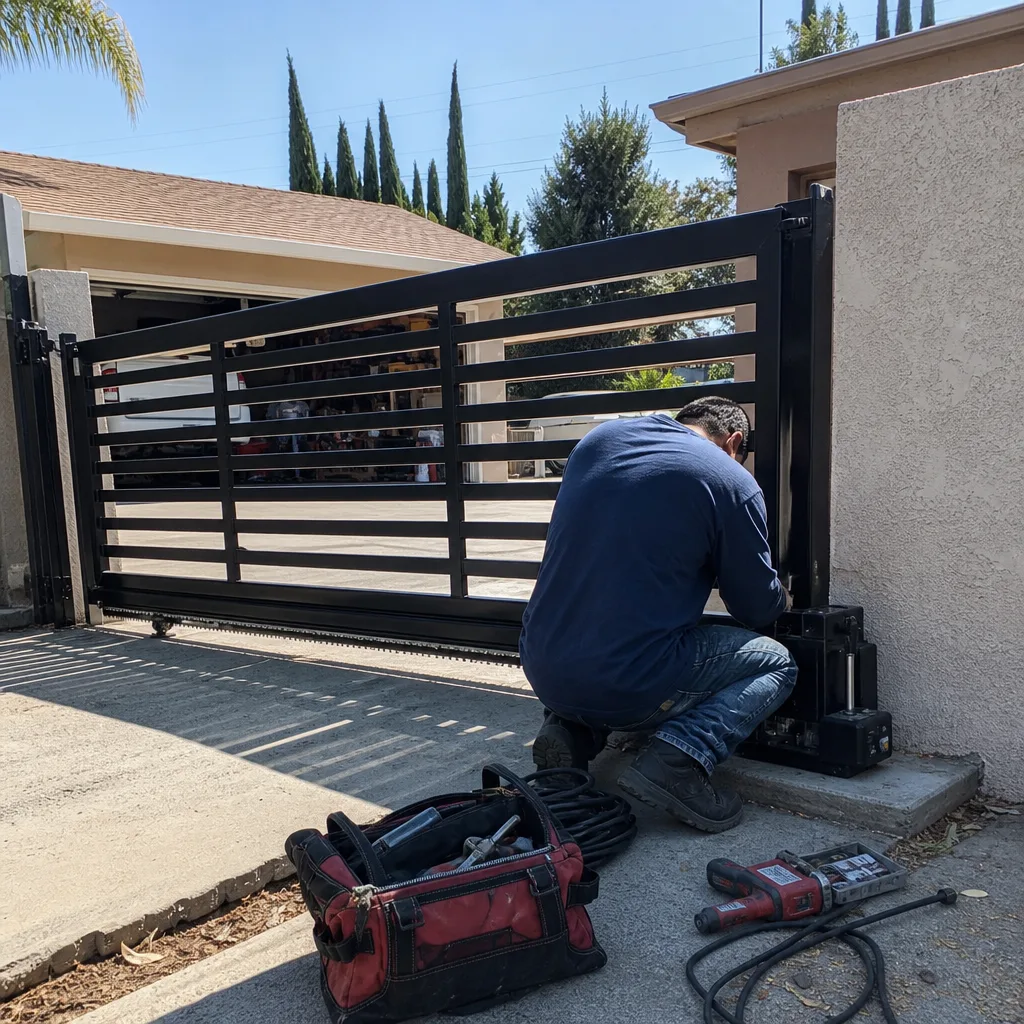 After
AfterSeasonal Gate Repair Care for West Covina: Year-Round Homeowner’s Guide
The gate failures West Covina technicians see most in January aren’t caused by December rain. They’re caused by the dry summer that contracted the wood frame and widened the gap the rain then entered. If you live here long enough, you start to see the pattern: every season in the San Gabriel Valley applies a different kind of stress to a different part of your gate, and each one leaves a signature. This guide maps maintenance to those actual stresses, season by season, so you can catch problems before they strand your car in the driveway or leave your property open at night. For deeper reading, see The Complete Guide to Gate Repair in West Covina. By the end, you’ll have a one-page annual log you can use to track what changes, what breaks, and what your gate costs you over time.
Quick Answer
Seasonal gate care in West Covina means addressing four predictable stress cycles: winter rain saturation that swells wood and reopens cracks, spring ground shift that throws hinges and motors out of alignment, summer heat that ages electronics and capacitors on gate operator boards, and fall debris from eucalyptus and liquid amber trees that clogs track systems and photo-eye paths. The most cost-effective approach is a 20-minute visual and mechanical check each quarter, with a written log so patterns become visible across years. Most seasonal damage is preventable at under $150; most ignored seasonal damage becomes a $400 to $1,800 repair.
Table of Contents
- Winter Rain Saturation: What the Dry Summer Already Set in Motion
- The Post-Rain Inspection Sequence: What to Look At, In What Order
- Spring Ground Shift: Why Hinges Move and Motors Hum Differently
- Summer Electronics Care: Heat Load on Operator Boards and Capacitors
- Fall Debris: Eucalyptus, Liquid Amber, and the Track Systems They Clog
- Winter Prep Before the Rain: A 90-Minute Checklist
- The One-Page Annual Gate Log: Format Your Seasons
- Common Mistakes to Avoid
BeforeAfterWinter Rain Saturation: What the Dry Summer Already Set in Motion
West Covina gets most of its rain between December and March, but the damage that shows up in January was usually seeded in August. Wood gates, especially cedar and redwood frames common in neighborhoods like South Hills and Woodside, lose moisture all summer. The boards contract. Screw holes widen by fractions of an inch, hinge plates pull slightly away, and the gate sags a quarter of an inch without anyone noticing. Then the first real storm arrives and the wood swells fast. The screws that were already loose now have wet, expanding fiber around them, and the hinge begins to work against the frame instead of with it. That’s the mechanism behind the January failures we see most often in West Covina: hinge tear-out, split stiles, and gates that suddenly drag on the ground after a storm.
What makes this worse is paint. A painted gate looks sealed, but the paint film on most older West Covina gates is cracked at the joints, especially along the bottom rail where water pools. Water enters through those capillary cracks, wicks into the end grain, and the board swells from the inside. The paint starts lifting in sheets by March. If you tap a swollen bottom rail and hear a dull thud instead of a sharp knock, moisture is already in the wood. That’s the sign to act, and it’s also the sign most homeowners miss because they don’t tap anything.
The single most useful winter check on a wood gate is screw torque at the hinge attachment points. Take a screwdriver to the hinge screws, especially the top hinge on a swing gate. If any screw turns more than a quarter turn with moderate pressure, the hole has loosened and water will follow. The fix is not a longer screw driven into wet wood. The fix is removing the screw, checking for rot in the hole, and re-seating it with an exterior-grade wood filler or moving the hinge position slightly. That’s a $40 fix if caught in November. It’s a $600 to $900 stile replacement if caught in February, because the wet wood won’t hold any fastener.
Metal gates have a different winter signature. Powder-coated steel and iron gates on the older hillside streets of West Covina take water at every weld joint, because that’s where the coating is thinnest. Rust starts as a hairline orange line along the weld bead. If you see that line before the end of January, you can sand it back, hit it with cold galvanizing spray, and prevent the structural rust-through that comes when the interior of the tube sweats. Ignored, that hairline becomes a bubbling blister by spring, and the gate section starts to feel spongy at the joint within two years.
We cover repair specifics on our Gate Repair in West Covina page if you’re already seeing hinge tear-out or joint rust. The seasonal point is this: winter damage is almost always the late-arriving bill for something that started in summer. Our technicians in West Covina have pulled apart enough January failures to know the calendar works backwards on gates. If you fix the dry-season looseness before the rains arrive, the rains have nothing to work with.
The Post-Rain Inspection Sequence: What to Look At, In What Order
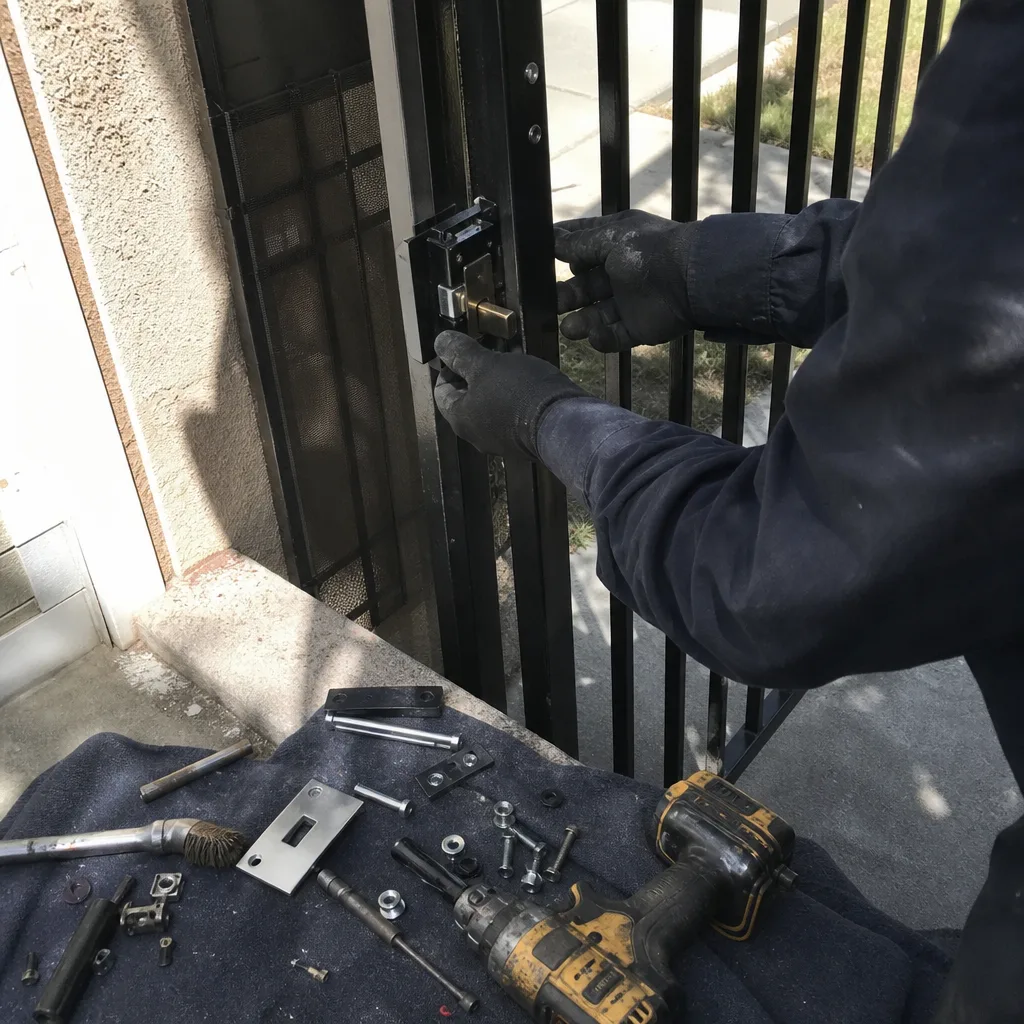
After any storm that drops more than half an inch on West Covina, there’s a 15-minute inspection sequence that tells you whether the water moved anything. The order matters, because problems cascade: a shifted gate strains the motor, which draws more current, which heats the board, which fails later even if the gate works fine today. Here’s the sequence we perform, and you can do the same.
- Measure the reveal at the latch side. The reveal is the gap between the gate and the post when the gate is closed. Use a tape measure and record the width at the top, middle, and bottom. If the bottom reveal is more than 3/8 inch different from the top, the gate or the post has moved. On wet ground in West Covina, that’s usually a settling post.
- Check the gate’s swing path for drag marks. Look at the ground or concrete under the gate’s arc. A new curved scratch in the concrete or a worn patch in the lawn that wasn’t there last week means the gate dropped. Dropping is water-saturated ground under the hinge post compressing.
- Kneel at each hinge and look for a new gap. Water causes post movement, and post movement shows up as a widening gap at the top hinge plate. If you can slip two business cards behind the top hinge plate where you could only fit one last season, the post has moved.
- Open and close the gate by hand with the motor disengaged. On swing gates, feel for increased resistance in the last 12 inches of travel. On slide gates, feel for a wobble or a catch mid-track. A gate that closes hard at the end is a gate that was just re-aligned by moving ground.
- Look at the operator arm or chain tension. If the ground shifted, the operator arm is now trying to push or pull at an angle it wasn’t designed for. You’ll hear it as a new groan or see it as a slight bend in the arm bracket.
- Check the photo-eye alignment. On slide gates especially, post movement knocks the photo-eye (the infrared beam that stops the gate if something crosses the path) out of alignment. If the gate reverses for no reason after a storm, this is the cause in more than half the cases we see in West Covina.
If every measurement matches your previous log entry and the gate opens and closes without new sounds or hesitation, the storm didn’t move anything. That’s the outcome you want, and the log tells you it’s the outcome you got. If one measurement is off by more than 3/8 inch, something moved, and you should call us for Gate Repair services before the motor spends weeks fighting the new geometry. A misaligned gate that keeps operating is accumulating wear on the motor, the board, and the hinges simultaneously.
One measurement we consistently write down in our West Covina service records is the post-plumb reading after a rain event. Two degrees off vertical on a 7-foot hinge post changes the geometry enough to shorten operator life by months. You can measure it yourself with a 4-foot level held against the post face. If the bubble sits outside the center lines, the post moved. That’s the measurement, and it’s worth $0 to take.
Spring Ground Shift: Why Hinges Move and Motors Hum Differently
West Covina’s clay-heavy soil expands when wet and contracts when dry. Spring is the expansion phase, but the expansion isn’t uniform. The south-facing side of a gate post dries first, while the north side stays wet for weeks. That differential drying means the post doesn’t just move; it tilts slightly toward the dry side. Homeowners in the neighborhoods below the Puente Hills, where the soil runs heavy with clay, see this every year and often misread it as hinge wear. It’s not the hinge that failed. It’s the ground it’s standing in.
The symptom pattern in spring is specific. A swing gate that closed smoothly in February starts stalling halfway through its travel in April. The motor hums lower for a second, then pushes through. That hum is the motor drawing more current against a gate that’s now binding at a hinge point. On slide gates, the symptom is a rhythmic scrape or a series of small jerks at one point in the track. The gate isn’t broken; the rail has developed a slight crown or dip as the ground under the concrete or rail bed shifted.
Spring is also when we see the most motor bracket failures on swing gates in West Covina. The bracket is the metal arm that connects the operator to the gate. When the gate moves out of plane with the motor, the bracket takes the stress. It bends first, then cracks, then snaps. A bent bracket is visible if you stand at the motor and look down the arm. The arm should be a straight line from the motor output to the gate attachment. If it’s bowed even slightly, that’s the ground-shift signature, and replacing the bracket without addressing the post movement means you’ll replace the bracket again in four months.
The spring adjustment that saves the most money is a hinge re-alignment. On a swing gate with adjustable hinges, loosening the plate and re-setting the gate so the reveal is even top to bottom restores the motor to its designed load. That’s a $120 to $200 service call. The alternative, running the gate for a year against a shifted hinge, often ends with a motor replacement, which on a standard residential swing gate runs $600 to $1,400 depending on the brand and the arm configuration. The math is fairly clear.
What about gates on concrete? Concrete gate posts in West Covina don’t heave the way soil-set posts do, but the concrete itself moves. Driveway slabs expand and contract with temperature, and a gate post set into a driveway can tilt as the slab curls. The measurement is the same as after rain: check plumb on the post. A tilt of two degrees on a gate post set in concrete means the slab has moved and the only lasting fix is either cutting the post and re-welding the flange or resetting the whole assembly. That’s not a spring tune-up. That’s a Gate Installation in West Covina level decision.
Summer Electronics Care: Heat Load on Operator Boards and Capacitors
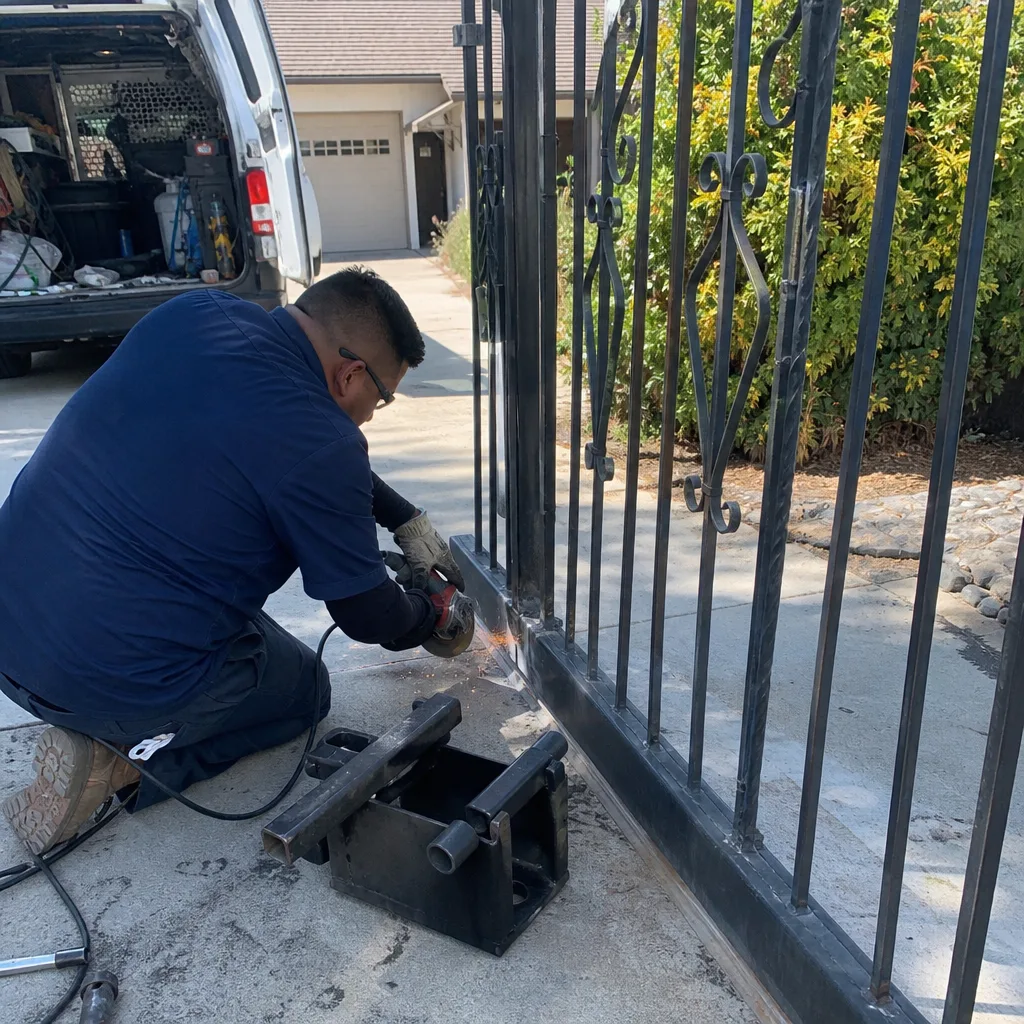
West Covina summer afternoons regularly cross 90 degrees, and a gate operator in direct sun reaches 120 to 140 degrees inside its housing. That’s not dangerous to the motor. The motor is a coil of copper wire and it tolerates heat well. The vulnerable parts are the control board and the capacitor, and both have specific heat-failure signatures you can learn to read.
A capacitor is the cylindrical component that stores and releases the burst of energy that starts the motor. Heat breaks down the dielectric material inside, and a failing capacitor shows physical signs before it fails electrically. Open the operator housing (with power disconnected at the breaker) and look at the top of the capacitor. A healthy capacitor has a flat top. A heat-stressed capacitor has a domed or bulged top. If you see any brown liquid residue around the base, the capacitor is already leaking electrolyte and is running on borrowed time. In our experience in West Covina, capacitors in south- and west-facing operators fail at about twice the rate of shaded or north-facing units. The ambient temperature threshold that begins accelerating wear is roughly 95 degrees inside the housing, and a west-facing metal housing on a 90-degree day is already there.
The control board fails differently. Heat doesn’t usually kill the board outright; it degrades the solder joints and capacitors on the board itself, and then a cool evening or a rain system causes a thermal contraction that finally cracks a joint. The symptom is often an intermittent fault: the gate works fine for two weeks, then refuses to open on a cool morning, then works again by noon. That’s not a ghost in the system. That’s a cracked solder joint opening and closing with temperature, and it will get worse until the board fails entirely. A replacement board for a DoorKing, Elite, or Mighty Mule residential operator runs $200 to $500, plus the service time to install and re-program it. That’s the summer heat bill if you ignore the early signs.
What can you do? First, shade. A simple sun screen mounted an inch off the operator housing drops internal temperatures by 15 to 20 degrees. Just make sure it allows air flow; a tight-fitting cover traps heat and makes things worse. Second, check the housing vents each spring. Spiders, dust, and leaf debris clog vent holes and turn the operator into a small oven. Third, if you have a gate intercom or keypad on a metal post in direct sun, check the keypad face for warping or button stickiness. Those are the same electronics, exposed, and they have a shorter life than the operator.
We service nine gate-automation brands, including DoorKing, Elite, Mighty Mule, and LiftMaster, because different motors show up on different streets in West Covina and the heat affects each slightly differently. A DoorKing board might show the intermittent fault signature; a Mighty Mule tends to fail more gracefully, with the capacitor going first and giving you a clean warning. Our Gate Motor & Opener in West Covina page covers the specifics of motor service if you want to understand what’s inside your operator and when it’s worth repairing rather than replacing.
Fall Debris: Eucalyptus, Liquid Amber, and the Track Systems They Clog
West Covina’s older residential streets are lined with eucalyptus and liquid amber trees, and both shed aggressively in the fall. Eucalyptus drops long strips of bark and crescent-shaped leaves. Liquid amber drops those spiky seed balls and a heavy volume of star-shaped leaves. Both are engineered by nature to clog a gate track, and on streets where these trees overhang driveways, the slide-gate track becomes a debris collection system every October and November.
The specific problem with eucalyptus debris is the bark. It’s fibrous, it curls when it dries, and it weaves itself around track rollers and wheel carriages. A single strip of bark wrapped around a roller adds friction and makes the gate work harder. A dozen strips, which is what a month of fall accumulation looks like in some West Covina neighborhoods, is enough to trip the motor’s obstruction sensing and make the gate reverse for no reason. The homeowner hears the gate beep and reverse, decides the gate is broken, and calls us. Often the fix is 20 minutes with a stiff brush and a shop vac.
Liquid amber seed balls are worse for a different reason. They’re hard, they’re round, and they’re exactly the right size to wedge under a slide gate’s lower edge or bounce into the wheel track. Once wedged, they act like a small wheel chock, and the gate starts to hop or stutter at one point in its travel. The hops telegraph up through the gate frame, loosen the rack and pinion alignment on a rack-drive slide gate, and over a season of hopping, the pinion gear wears unevenly. That’s a $250 to $500 gear replacement caused by a seed ball that could have been swept away in the same time it took to read this sentence.
The fall maintenance window in West Covina is tight. The liquid ambers drop their leaves over about six weeks, and if you don’t clear the track weekly during that window, the leaves pack down into the rail and form a damp mat that holds moisture against the steel. That’s the start of track rust, and a rusted track accelerates roller wear by orders of magnitude. The routine that works: once a week from mid-October through the end of November, run the gate to both ends and clear the entire track with a stiff brush, then vacuum the rail groove. If you have a photo-eye, check that the lens faces are clean and unobstructed, because one curled eucalyptus leaf in front of a photo-eye makes the gate think something is in the path and refuse to close.
Swing gates aren’t immune. Liquid amber balls collect at the base of hinge posts and can wedge under the gate as it opens, scraping the paint and trapping moisture against the bottom rail. That bottom rail is the same one the winter rain wants to enter. Fall debris and winter water damage are a two-step process, and clearing in October is step one.
Winter Prep Before the Rain: A 90-Minute Checklist
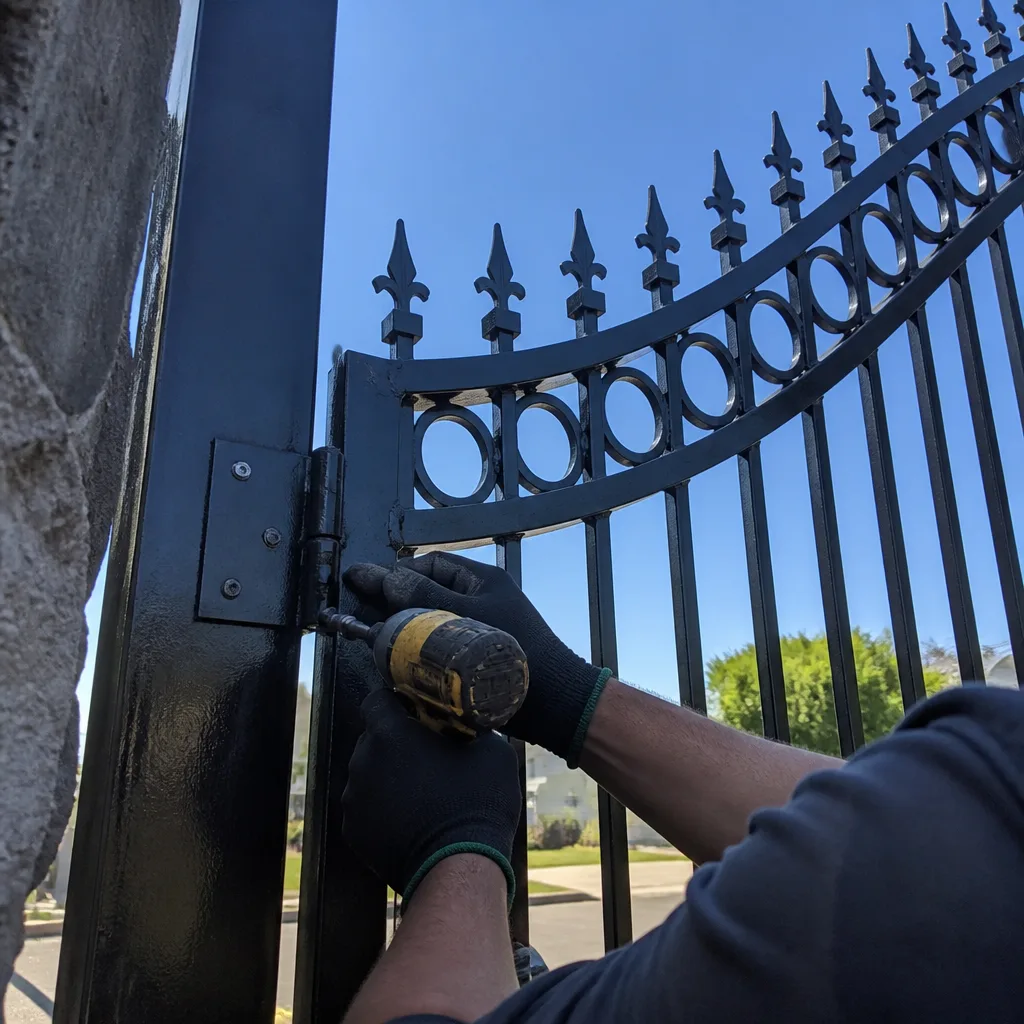
Before the first serious storm of the season arrives in West Covina, typically in December, there’s a 90-minute checklist that addresses every failure mode the rains will exploit. Do this once in late November or early December, and you’ve closed most of the gaps winter wants to find.
- Tighten every hinge screw and bracket bolt. Hand-check each fastener on the gate, the post, and the operator arm. If any feels loose or turns without resistance, address it now. A screw that’s already loose in November will be working in wet wood by January.
- Check the gate’s clearance at the bottom. Swing gates need a minimum of 2 inches of clearance at the bottom rail to clear swelling soil and puddled water. If the gate currently has less than 2 inches, the winter will probably set it on the ground. Adjust the hinge height or plane the bottom rail while it’s still dry.
- Seal visible cracks in wood gates. Any crack wider than the edge of a credit card is a water entry point. Fill it with exterior wood filler or a flexible sealant rated for wood movement. Don’t paint over the crack without filling it; the paint will trap moisture and peel within weeks.
- Clear and lubricate the track or hinges. Use a dry lubricant on hinges and a heavy-duty track lubricant or dry graphite on slide tracks. Avoid grease, which attracts dust and gum in West Covina’s dry air and makes the track worse.
- Test the photo-eye and the reversing mechanism. Place a roll of paper towels in the gate’s path and close the gate. It should stop and reverse before touching the roll. If it doesn’t, the photo-eye or the motor’s obstruction sensing is not working, and that’s a safety issue before it’s a reliability issue.
- Check the operator housing seal. Look at the gasket around the operator door or cover. If it’s cracked, flattened, or missing, water gets in during a driving rain. Replace the gasket or add a temporary weather strip. This is also the time to confirm the housing vents are clear.
- Record your baseline measurements. Write down the reveal measurements at top, middle, and bottom, the post plumb, and the bottom clearance. Put it in the annual log. You need those numbers in January to know whether the storm moved anything.
The 90-minute checklist is prevention. The January inspection is confirmation. Together they form the winter-cycle pair, and if you do both, winter becomes the season when nothing happens to your gate. That’s the goal: a season with no service call, no emergency, and no entry on the log except “baseline confirmed.”
For the larger picture of what your gate will need over a full operating year, our Vance Gate Repair West Covina home page has an overview of the services we provide and how we think about residential gate maintenance differently than most.
The One-Page Annual Gate Log: Format Your Seasons
We file a documented record on every gate we service in West Covina: what was found, what was adjusted, what was replaced, photographed and written down before we leave. That habit, called the Haven Standard at Vance Gate Repair, came out of commercial access-control work where you can’t remember what happened last year unless someone wrote it down. You can find more guides & resources on our blog. Homeowners can run the same habit with a one-page log, and it’s the single most effective tool for turning seasonal gate care from guesswork into a pattern you can act on.
Here’s the format. Create a page, print it, and fill in one row per season.
The Seasonal Gate Log
- Date: (When you performed the check)
- Season: (Winter / Spring / Summer / Fall)
- Bottom clearance: (In inches, measured at the latch side)
- Reveal measurements: (Top, middle, bottom, in inches)
- Post plumb reading: (Bubble centered? Or how many degrees off?)
- Hinge screw results: (Any loose? Any turned more than a quarter turn?)
- Track or hinge condition: (Clean, debris present, rust line, wear marks)
- Operator temperature check: (Was the housing warm to touch? Any capacitor bulging?)
- Photo-eye test result: (Pass / fail, or “not tested”)
- Actions taken: (Tightened screws, cleared track, sealed crack, called for service)
- Notes: (Anything unusual: new sound, new drag, storm event since last check)
Six rows a year, four seasons, and you build a history. The first season is just a snapshot. The second season starts to show movement. By the third season, if a crack is widening or a hinge is loosening on a schedule, the log makes it undeniable. That’s the same principle we use at Vance Gate Repair: the documented record is what turns a one-time observation into a trend, and the trend is what tells you what’s actually happening. It’s not about memory. It’s about measurement.
If writing things down feels like too much, start with just three numbers each season: bottom clearance, top reveal, post plumb. Those three measurements capture most of the seasonal stress cycle in West Covina, and you can fill in the rest later. The important thing is the habit of noticing, and the log is how noticing compounds.
Common Mistakes to Avoid
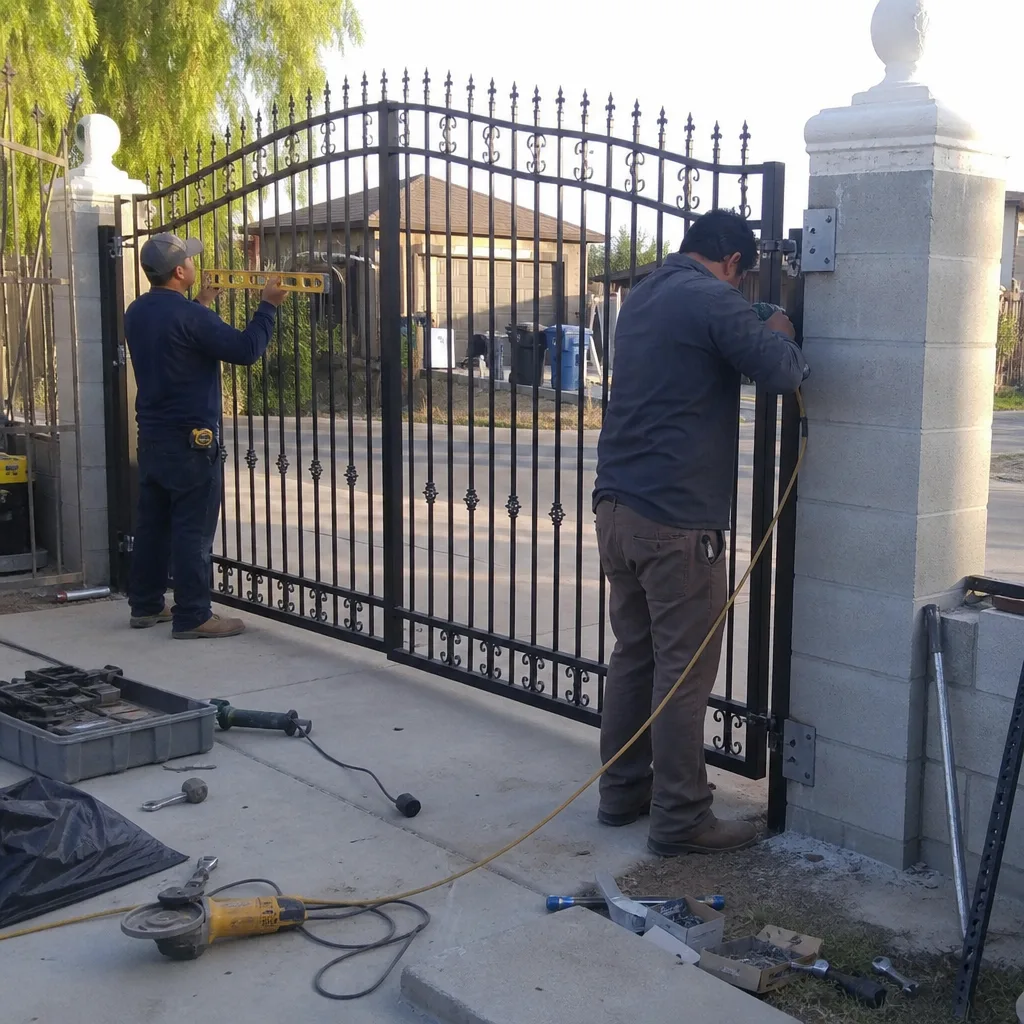
- Lubricating hinges and tracks with WD-40. WD-40 is a solvent that displaces moisture, not a long-term lubricant. It cleans the hinge briefly and then leaves it dry, which accelerates wear. Use a dedicated dry lubricant for hinges and a dry graphite or track-specific lubricant for slide tracks.
- Painting over cracked wood without filling it. Paint is a moisture barrier, not a filler. Paint over a crack seals water in, and the crack keeps moving under the film. The paint peels in sheets and the crack gets worse. Fill first, then paint.
- Tightening hinge screws into wet or stripped wood without treating the hole. A stripped screw hole in wet wood won’t hold any fastener. The correct sequence is: remove the screw, inspect for rot, fill the hole with exterior-grade wood filler, and only then re-seat the fastener. If the wood is punky, the hinge needs to move to a new position.
- Ignoring a gate that reverses for no reason. That reversal usually means the photo-eye is misaligned or the motor’s obstruction sensing is tripping. It’s also the gate telling you something changed. Running it in bypass mode while you “figure it out later” defeats the safety system that exists to keep people, pets, and cars from being hit.
- Assuming a loud motor is just old. A louder-than-normal motor is usually a motor working against a changed alignment, not an old motor expressing its age. The cause is typically a shifted post or a bent bracket. Fix the geometry and the noise goes away; replace the motor without fixing the geometry and the new motor is loud in six months.
- Skipping the fall track clearing because “there aren’t that many leaves this year.” In West Covina, there are always enough. Eucalyptus bark and liquid amber balls don’t need volume to cause problems; one bark strip around a roller or one seed ball wedged under the gate is enough. The weekly sweep takes 10 minutes.
- Closing the gate after a storm without checking what the water moved. The worst time to run a misaligned gate is right after the storm that misaligned it. Check the measurements first. If the gate has dropped or the post has shifted, running the motor against the new geometry for two weeks before you call us is exactly how a $150 alignment becomes a $900 motor replacement.
When to Call a Professional
Some gate issues are seasonal and preventable; others mean something structural has happened and the right move is a professional inspection. Call us if the post-plumb reading is off by more than two degrees, if the gate has dropped more than half an inch since the last check, if the motor is hot to the touch after normal use, if the capacitor shows a domed top or leaking residue, or if the gate reversed on its own more than twice in a day. Those are the signs that seasonal stress has crossed from maintenance into repair territory, and they’re the signs our technicians in West Covina look for first. Vance Gate Repair West Covina offers free estimates in West Covina. Call (562) 368-4485, tell us what you’re seeing, and we’ll schedule a technician to measure, inspect, and give you a written price before any work starts. A live person answers, any hour.
Frequently Asked Questions
Once per season, which means four times a year. The dates don’t need to be exact; what matters is that you do the check after seasonal transitions: after the first rains (January), after the ground has had time to shift (April), during peak heat (July or August), and during peak leaf drop (late October or November). Each check takes about 20 minutes. For a gate that sees daily vehicle traffic, that’s the minimum that catches seasonal damage before it becomes a repair. Call (562) 368-4485 if you want us to do the seasonal check for you and document it, so you have a written record.
A seasonal inspection that confirms everything is stable typically runs $75 to $150 when you schedule it as a maintenance visit. If the inspection finds something that needs adjustment or repair, the inspection fee is often folded into the repair quote, which we give you in writing before any work starts. That written price is standard practice at Vance Gate Repair, and it means you know the cost before you authorize anything, never after. Call (562) 368-4485 for a free estimate on any West Covina gate issue.
Check the post plumb and the reveal measurements first. Rain-saturated ground in West Covina moves posts, and a moved post changes the gate’s alignment, which makes the motor grind against the new geometry. If the post is plumb and the reveals haven’t changed, the grinding is more likely a hinge or roller issue. If you can’t identify the cause, call us at (562) 368-4485 and we’ll measure it, find the source, and give you a written price for the fix before any work begins.
Yes, we service all four of those brands, along with five others. Different streets in West Covina have different operators installed, and we work on the motor that’s already on your property rather than steering you toward a replacement. If you have a DoorKing that’s running intermittently or a Mighty Mule with a bulging capacitor, we’ll diagnose it, show you the evidence, and quote the repair in writing. Call (562) 368-4485 and tell us what brand you have and what it’s doing.
A full installation includes the gate itself, the posts, the hinges or track system, the operator if you’re automating it, the photo-eyes and safety edges, and the power run from your electrical panel to the operator location. We specify every component on the written quote, so you see exactly what’s included and what the price covers before you commit. The cost varies with gate size, material, and operator brand, but a typical automated steel or iron swing gate installation in West Covina runs between $4,000 and $9,000 depending on the details. Call (562) 368-4485 for a free measure and a written price.
If the frame is solid, the hinges or track are intact, and the motor runs without overheating, you have a tune-up candidate. The tune-up is the seasonal work described in this guide, and it’s under $200 in most cases. If the frame has rot at the hinge points, the track has rust-through, or the operator is past its service life and the repair cost approaches 60% of a replacement, the numbers usually favor replacement. See DIY vs Professional Gate Repair: The West Covina Homeowner’s Decision Guide for help deciding which path fits your situation. We’ll tell you which one you’re looking at and back it with a written price for either path. Call (562) 368-4485 for an honest assessment.
The Bottom Line
West Covina’s climate doesn’t give you dramatic seasons, but it gives you a predictable four-part stress cycle on your gate: winter rain that finds the gaps summer left, spring ground shift that throws geometry off, summer heat that ages electronics, and fall debris that clogs the path and accelerates wear. Each season has specific signs and specific fixes, and the pattern only becomes visible if you record measurements over time. Twenty minutes per season, three baseline numbers, and a willingness to act early, and most gate repairs become avoidable. When the seasonal check finds something real, call (562) 368-4485. We’ll measure it, document it, and give you a written price before any work starts.
Written by Adrian Vance, Owner at Vance Gate Repair West Covina, serving West Covina since 2014.